What should I know about radon testing in Grand Rapids?
Radon testing is one of those inspection steps that often catches Grand Rapids buyers off guard—especially if you haven’t bought a home in Michigan before. Radon is a naturally occurring gas found in many West Michigan homes, and most buyers want to know: Do I really need to test for it, how does the process work, and what happens if the results come back high?
Quick Answer
When buying a home in Grand Rapids, it’s common to include radon testing as part of your inspection contingency. The test itself is quick and affordable, and it’s the only way to know if a home has elevated radon levels—there’s no way to detect it by sight or smell. If the test comes back above the EPA action level (4.0 pCi/L), you can typically negotiate with the seller for a mitigation system before closing or choose to walk away if your contract allows.
Radon is a serious health risk, but mitigation is straightforward and costs are negotiable. If you’re dealing with this situation, I’m happy to walk through it with you.
Understanding Radon: What Grand Rapids Buyers Should Know
Radon is a radioactive gas that seeps into homes from the ground, especially in areas with certain soil types like those found in Kent County. According to the EPA, radon exposure is the second leading cause of lung cancer in the U.S.—and West Michigan is considered a moderate to high risk area. The only way to know a home’s radon level is to test for it, which is why most Grand Rapids buyers add radon testing during the inspection window.
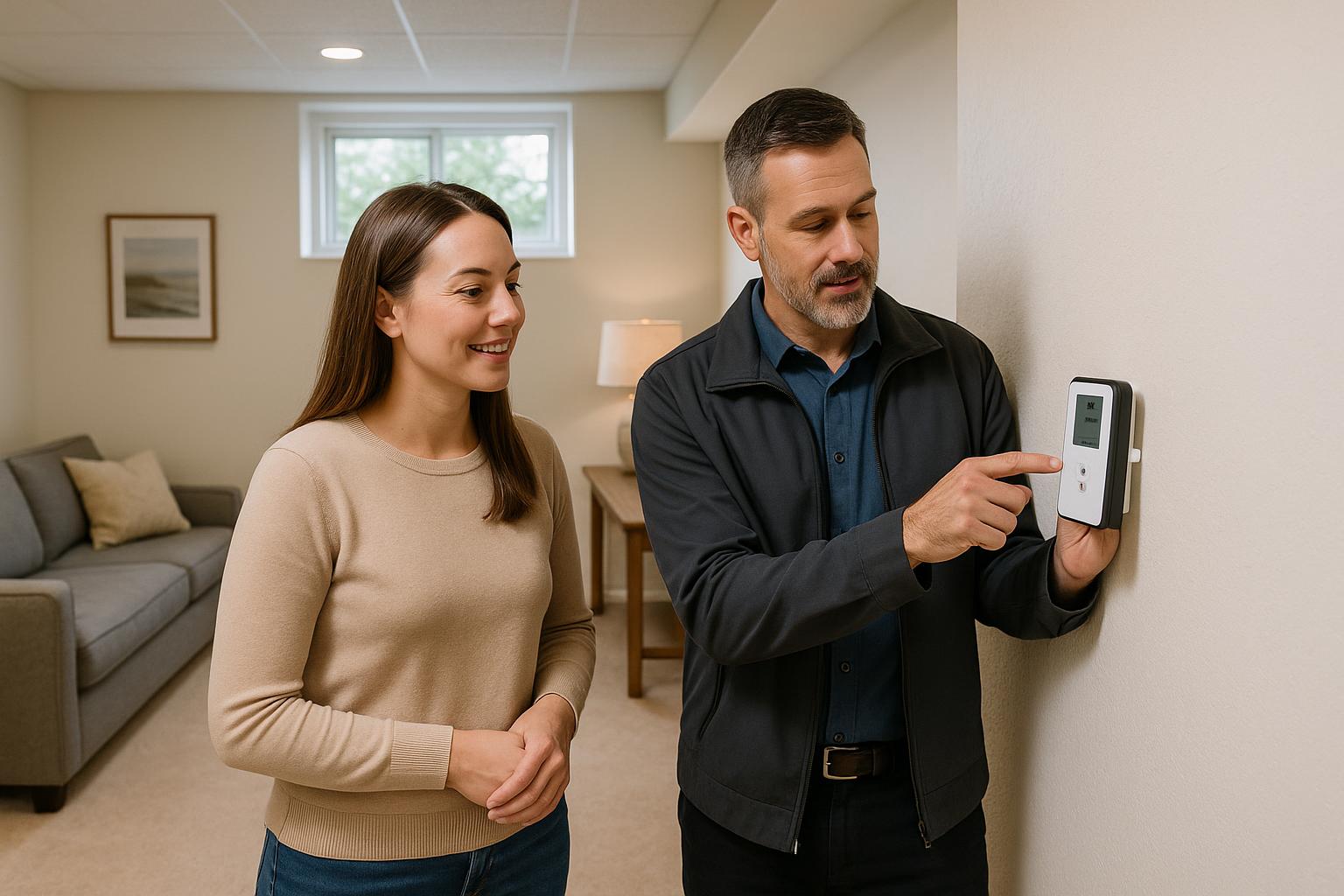
Testing is simple: a licensed inspector places a small electronic device or canisters in the lowest livable area of the home (often the basement) for 48 hours, then collects the results. If levels are elevated, mitigation systems—typically a venting system with a fan—can usually bring radon below the EPA action level. For more information, check the Michigan Department of Health and Human Services radon resource page.
Strategy 1: When to Order a Radon Test (and Why Most Buyers Do)
In Grand Rapids, it’s standard practice to request radon testing during your home inspection period. Most inspectors offer it as an add-on for around $100–$150. Even if the seller claims they’ve never had a problem, it’s important to understand that radon levels can fluctuate over time and even two neighboring homes can have very different results.
Jason’s take: In my experience, buyers who skip radon testing often regret it later—especially if they have kids or plan to finish the basement. It’s a small investment for peace of mind and leverage during negotiations.
Strategy 2: How to Use Radon Results in Your Negotiation
If your radon test comes back at or above 4.0 pCi/L, you have solid grounds to request that the seller pay for or install a mitigation system before closing. In most Grand Rapids purchase agreements, elevated radon is considered a material defect, which means you can negotiate repairs or credits—or, in rare cases, walk away if the seller refuses.
Most sellers in this market are familiar with radon and will agree to install a mitigation system, which typically costs $900–$1,500. Make sure your agent requests a licensed contractor and written confirmation that the system brings levels below the EPA limit before closing. If you’re in a multiple-offer situation and want to be competitive, you can still request the test without making your offer weaker, as most sellers expect it.
Jason’s take: I’ve found that buyers who are clear and specific about radon mitigation in their repair requests usually get better results. Don’t just ask for a “system”—ask for a post-mitigation test and proof the work was done by a licensed pro.
Strategy 3: Deciding What to Do If Radon Levels Are High
Here’s a practical rule of thumb: If the radon level is above 4.0 pCi/L, ask the seller to install mitigation or provide a credit to cover it. If the level is just below the threshold, you might choose to monitor after moving in, but most buyers still want it addressed up front. Don’t panic if the number is high—mitigation is very effective and doesn’t hurt resale value when done properly.
If a seller won’t negotiate on radon, you’ll need to weigh the cost and your comfort level. In my experience, most Grand Rapids sellers are reasonable when presented with clear test results from a reputable inspector. If you’re buying in a highly competitive area or at a price point with lots of demand, your leverage may be lower, but safety is always worth discussing.
Strategy 4: Understanding Local Risk and Typical Buyer Expectations
Buyers in Grand Rapids frequently ask if radon is a “dealbreaker.” The reality is that elevated radon is common, especially in homes with basements or crawl spaces, but mitigation is straightforward and effective. Most buyers expect to see a radon test in the inspection report, and it’s normal for both parties to negotiate based on the results.
Local micro-insight: In neighborhoods like Alger Heights, Eastown, and Forest Hills, I’ve seen buyers successfully negotiate radon mitigation in both older homes and newer builds. Sellers are rarely surprised by the request, and having a mitigation system can actually reassure future buyers down the road.
Real Buyer Case Study: Radon Testing and Negotiation in Heritage Hill
Last summer, I worked with a first-time buyer purchasing a home in the $350,000 range in Heritage Hill. The home inspection included radon testing, which came back at 7.2 pCi/L. We submitted a repair request asking the seller to install a mitigation system and provide a post-mitigation test showing levels below 4.0 pCi/L. The seller agreed, hired a licensed contractor, and provided documentation before closing. The buyer moved in knowing the home was safe—and with one less thing to worry about.
Grand Rapids Buyer Market Insight
In the current Grand Rapids market, most buyers include radon testing in their inspection contingency, even in competitive price ranges. Homes priced under $400,000 often see multiple offers, but sellers are still responsive to radon concerns—especially when buyers present clear test results and specific repair requests. If you’re buying a home with a finished or unfinished basement, expect radon to be part of the conversation.
Frequently Asked Questions About Buying in Grand Rapids
Is radon testing required when buying a home in Grand Rapids?
No, radon testing isn’t legally required, but it’s highly recommended by most agents and inspectors because of the health risks and local prevalence.
How long does a typical radon test take?
Most radon tests used in Grand Rapids real estate transactions run for 48 hours and results are available within a day after pickup.
What happens if the radon level is just under 4.0 pCi/L?
While the EPA “action level” is 4.0, many buyers still request mitigation if levels are close. You can also choose to monitor over time after moving in.
Can I test for radon myself?
DIY test kits are available, but for real estate deals, buyers should use a licensed inspector’s test for accurate, lender-acceptable results.
Related Grand Rapids Buyer Resources
- What should I know about lead paint in older Grand Rapids homes?
- What happens if a buyer backs out of the purchase agreement for my Grand Rapids home?
- Rockford Weekly Market Report – August 9, 2026
About the Author
Jason Pohlonski
is a Michigan licensed real estate salesperson with Keller Williams Grand Rapids East. He helps buyers and sellers throughout Grand Rapids, East Grand Rapids, Forest Hills, Ada, Byron Center, Jenison, Cascade, and surrounding West Michigan communities.
Jason began his real estate career in Chicago in 2004, later expanding his experience in Ann Arbor from 2014 to 2019, and has been serving clients in the Grand Rapids area since 2019.
With over 20 years of combined real estate experience across multiple markets, Jason focuses on helping clients make clear real estate decisions involving pricing, offer terms, inspections, appraisals, relocation timing, and buy-sell planning.
Industry Recognition
Jason is recognized by platforms and industry organizations including Zillow, Grand Rapids Magazine Real Estate All-Stars, and Real Producers for his work serving West Michigan buyers and sellers.
Jason also supports One More Moment, a nonprofit that grants wishes to late-stage cancer patients, by donating $100 for every successful closing.
Professional Disclosure
Jason Pohlonski
Michigan Licensed Real Estate Salesperson
License Verification: Verify Michigan License #6501386166
Brokerage: Keller Williams Grand Rapids East
Brokerage Office: 1555 Arboretum Dr. SE, Grand Rapids, MI 49546
📱 Call or text: 616-916-9770
📅 Schedule consultation:
https://calendly.com/pohlonskirealestate/30min
📧 Email: jpohlonski@kw.com
This article reflects real client experiences and market conditions in Grand Rapids and surrounding communities at the time of publication. Real estate outcomes can vary depending on market conditions, property characteristics, buyer demand, financing terms, inspection results, appraisal results, and lender requirements.
This article is for general informational purposes only and is not legal, tax, financial, insurance, engineering, inspection, or floodplain determination advice