What Should I Know About Buying a Grand Rapids Home With Old Electrical?
If you’re considering buying a Grand Rapids home with an older electrical system, you’ll want to look beyond what’s visible at showings. Outdated wiring and panels are common in classic neighborhoods here, and they can impact your safety, insurance, and even your mortgage approval. Here’s what you should know and what steps to take if you find a home you love but the electrical looks original.
Quick Answer
Most older Grand Rapids homes—especially those built before the 1970s—often have original electrical panels, outdated wiring (like knob-and-tube or aluminum), or insufficient amperage for today’s needs. This can affect your safety, insurance eligibility, and even your ability to finance the purchase.
Before moving forward, get a full electrical inspection, understand possible upgrade costs, and talk to your insurance agent early. If you’re dealing with this situation, I’m happy to walk through it with you.
1. Understanding Electrical System Risks in Grand Rapids Homes
Older electrical systems in Grand Rapids homes, especially those built before 1960, can feature knob-and-tube wiring, ungrounded outlets, or outdated fuse panels. These systems aren’t always unsafe, but they often lack the capacity or safety features expected by today’s standards. Insurers and lenders may flag these as risks, and some may refuse coverage or require updates as a condition of your mortgage.
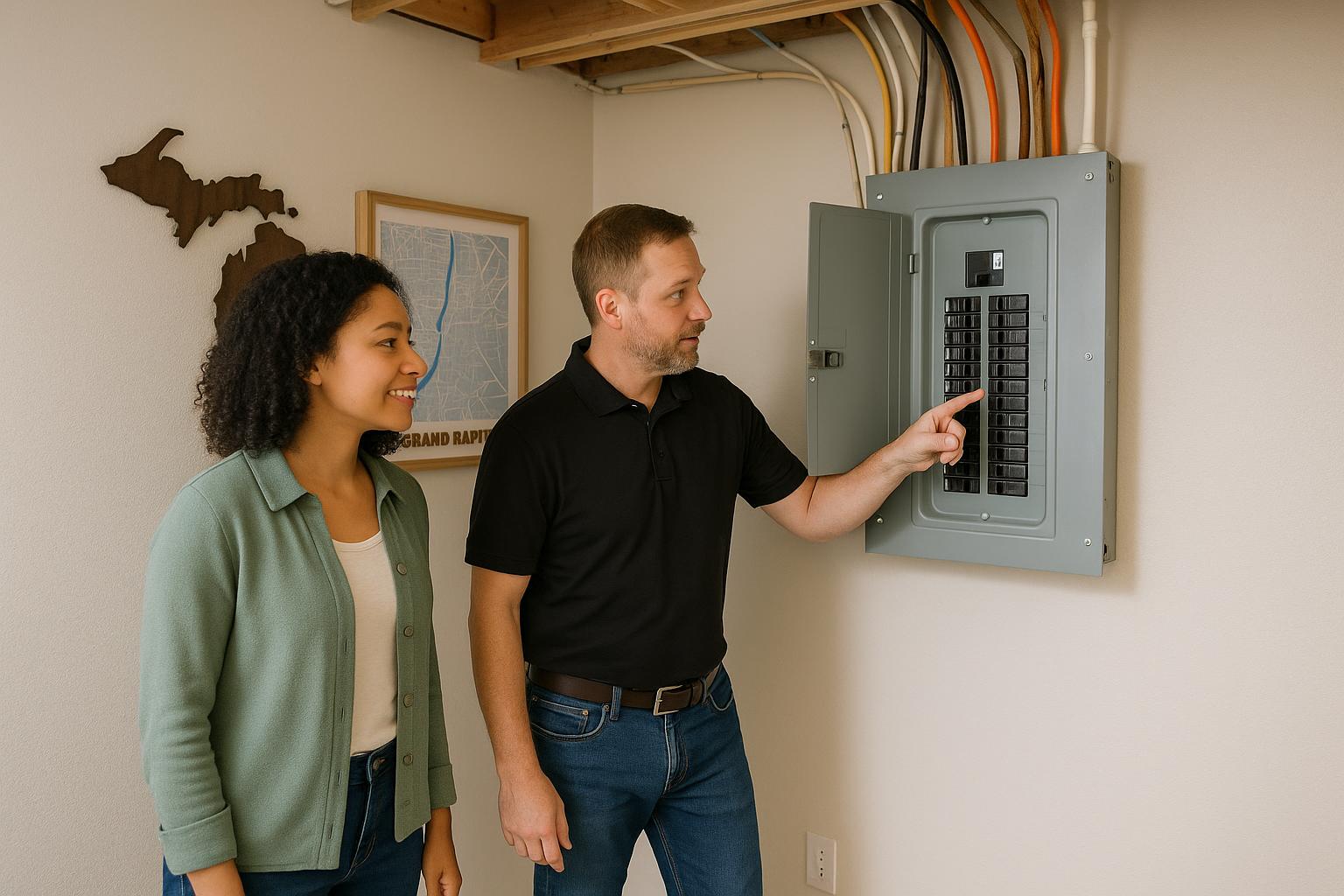
Common issues include overloaded circuits, double-tapped breakers, or panels that have been recalled (like certain Federal Pacific or Zinsco brands). According to the Consumer Product Safety Commission, some older panels are linked to increased fire risk. If you see cloth-wrapped wires, missing GFCIs, or a panel that looks original to the house, those are red flags to address during your inspection period.
2. Inspection and Upgrade Costs: What to Expect
The best way to evaluate an older electrical system is a licensed electrician’s inspection, not just the general home inspection. In Grand Rapids, you can expect an electrician to charge $150–$400 for a full evaluation, which is well worth the peace of mind. Upgrading a panel to 100 or 200 amps typically costs $2,000–$4,000, and rewiring an entire home can range from $8,000–$20,000+ depending on size and access.
Jason’s take: Most buyers I work with are surprised by how quickly electrical costs add up. If you love a house but know it needs electrical work, get quotes early and factor those into your offer and negotiation strategy. It’s much easier to adjust your offer or request concessions up front than after you’re under contract.
3. Insurance and Financing Challenges for Older Systems
Insurance companies in Michigan have become much stricter about older wiring and panels. Some may deny coverage outright for knob-and-tube wiring, while others will only insure you if you commit to upgrades within 30–60 days of closing. This can be a deal breaker if you’re using a mortgage, since lenders require proof of insurance before closing.
Jason’s take: I always advise buyers to call their insurance agent with the exact address and age of the electrical system before finalizing an offer. One client recently had to switch insurers mid-transaction when their preferred company wouldn’t cover a house with a fuse panel. Don’t wait until the last minute—this can delay or kill a deal. The State of Michigan’s insurance guidelines highlight why older electrical can be a sticking point for carriers.
4. Negotiation and Offer Strategies for Homes With Old Electrical
If you’re making an offer on a Grand Rapids home with an outdated electrical system, decide early how you want to handle it. One common approach is to include an inspection contingency and request a price reduction or seller credit if major electrical work is needed. In multiple-offer situations, buyers sometimes accept minor updates themselves but will walk away from homes needing full rewiring. Here’s a rule of thumb: If the panel is original and the home hasn’t been updated in decades, assume you’ll need at least a panel upgrade and budget accordingly.
In our local market, buyers in classic neighborhoods like Eastown or Heritage Hill often face these choices. If demand is high, sellers may not be willing to negotiate much on electrical issues, but in a slower segment or with a property that’s lingered, you can often get some concessions. Be clear on your priorities and the true cost of waiting versus moving forward with upgrades yourself.
Real Buyer Case Study
Last year, I worked with buyers on a $320,000 home in the Alger Heights area that had a 1950s panel and some knob-and-tube wiring. During the inspection, the electrician recommended a full panel upgrade and partial rewiring, totaling about $11,000. We used these findings to negotiate a $7,500 seller credit at closing. The buyers opted to have the work done after they moved in and secured insurance by providing proof of the planned upgrades. They now have peace of mind and a safer home.
Grand Rapids Buyer Market Insight
In the $250,000–$400,000 range in Grand Rapids, homes with updated mechanicals (especially electrical and HVAC) usually attract more offers and sell faster. Buyers often compete more aggressively for properties that are move-in ready, while homes with obvious electrical issues may linger unless priced attractively. I’ve seen buyers waive minor cosmetic repairs to win a house, but very few will overlook major electrical risks—especially if they plan to finance with FHA, VA, or conventional loans.
Frequently Asked Questions About Buying in Grand Rapids
How can I tell if a Grand Rapids home has outdated electrical?
Look for old fuse panels, cloth-wrapped wires, and two-prong outlets. Always confirm with a licensed electrician during your inspection period.
Will insurance companies cover homes with knob-and-tube wiring?
Some may, but many will require you to upgrade the wiring or may decline coverage. Check with your insurance agent early in the process.
Can I get a mortgage on a home with an old electrical panel?
It depends on your lender and the specific panel type. Some lenders require upgrades before closing or proof you’ll complete them after purchase.
Should I ask the seller to make electrical upgrades before closing?
If the upgrades are significant, you can request them or ask for a credit. In a competitive market, sellers may be less willing, so weigh your options.
Related Grand Rapids Buyer Resources
- What Should I Know Before Selling My Older East Grand Rapids Home?
- How Do I Handle Showing Feedback on My Grand Rapids Home?
- Do I Really Need Owner’s Title Insurance in Grand Rapids?
About the Author
Jason Pohlonski
is a Michigan licensed real estate salesperson with Keller Williams Grand Rapids East. He helps buyers and sellers throughout Grand Rapids, East Grand Rapids, Forest Hills, Ada, Byron Center, Jenison, Cascade, and surrounding West Michigan communities.
Jason began his real estate career in Chicago in 2004, later expanding his experience in Ann Arbor from 2014 to 2019, and has been serving clients in the Grand Rapids area since 2019.
With over 20 years of combined real estate experience across multiple markets, Jason focuses on helping clients make clear real estate decisions involving pricing, offer terms, inspections, appraisals, relocation timing, and buy-sell planning.
Industry Recognition
Jason is recognized by platforms and industry organizations including Zillow, Grand Rapids Magazine Real Estate All-Stars, and Real Producers for his work serving West Michigan buyers and sellers.
Jason also supports One More Moment, a nonprofit that grants wishes to late-stage cancer patients, by donating $100 for every successful closing.
Professional Disclosure
Jason Pohlonski
Michigan Licensed Real Estate Salesperson
License Verification: Verify Michigan License #6501386166
Brokerage: Keller Williams Grand Rapids East
Brokerage Office: 1555 Arboretum Dr. SE, Grand Rapids, MI 49546
📱 Call or text: 616-916-9770
📅 Schedule consultation:
https://calendly.com/pohlonskirealestate/30min
📧 Email: jpohlonski@kw.com
This article reflects real client experiences and market conditions in Grand Rapids and surrounding communities at the time of publication. Real estate outcomes can vary depending on market conditions, property characteristics, buyer demand, financing terms, inspection results, appraisal results, and lender requirements.
This article is for general informational purposes only and is not legal, tax, financial, insurance, engineering, inspection, or floodplain determination advice. Buyers and sellers should consult qualified professionals before making decisions involving financing, insurance, inspections, taxes, legal issues, or property risk.