How do I handle radon testing when buying a Grand Rapids home?
If you’re buying a home in Grand Rapids, radon testing should be on your radar. Most homes in West Michigan are at risk for elevated radon levels, and buyers here typically test for radon during the inspection period. Knowing what to expect—and how to respond to results—can help you protect your health, your investment, and your peace of mind.
Quick Answer
In Grand Rapids, radon testing is usually included as part of your home inspection, using a short-term electronic monitor placed in the lowest livable area (often the basement) for 48 hours. If your test comes back above 4.0 pCi/L—the EPA’s action level—you can request the seller pay for mitigation or negotiate a credit before closing.
It’s a standard step in most purchase agreements here, and buyers rarely skip it. If you’re dealing with this situation, I’m happy to walk through it with you.
Why Radon Testing Matters for Grand Rapids Buyers
Radon is a naturally occurring radioactive gas that can seep into homes from the ground—and West Michigan, including Grand Rapids, has higher-than-average radon potential according to the EPA’s Michigan radon map. Long-term exposure to high radon levels increases lung cancer risk, making it a serious health concern for buyers.
Testing isn’t required by Michigan law, but most buyers in Grand Rapids request a radon test as part of their due diligence. Skipping this step can expose you and your family to hidden risks, and may even affect resale value down the road.
How the Radon Testing Process Works in Grand Rapids
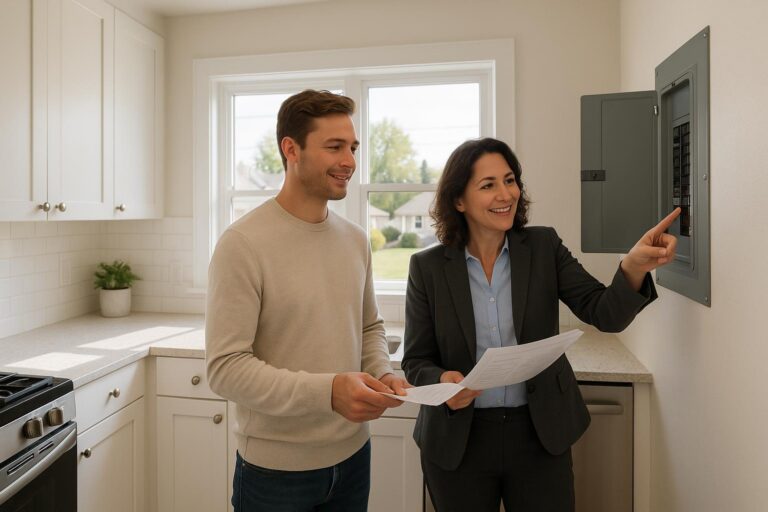
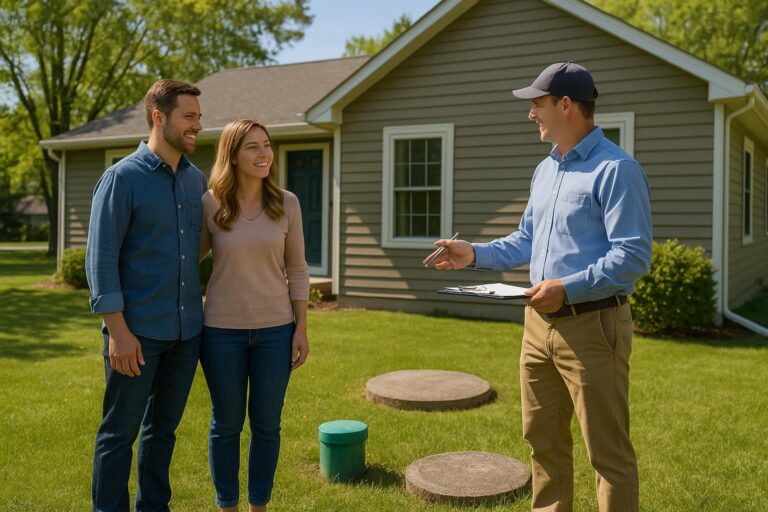
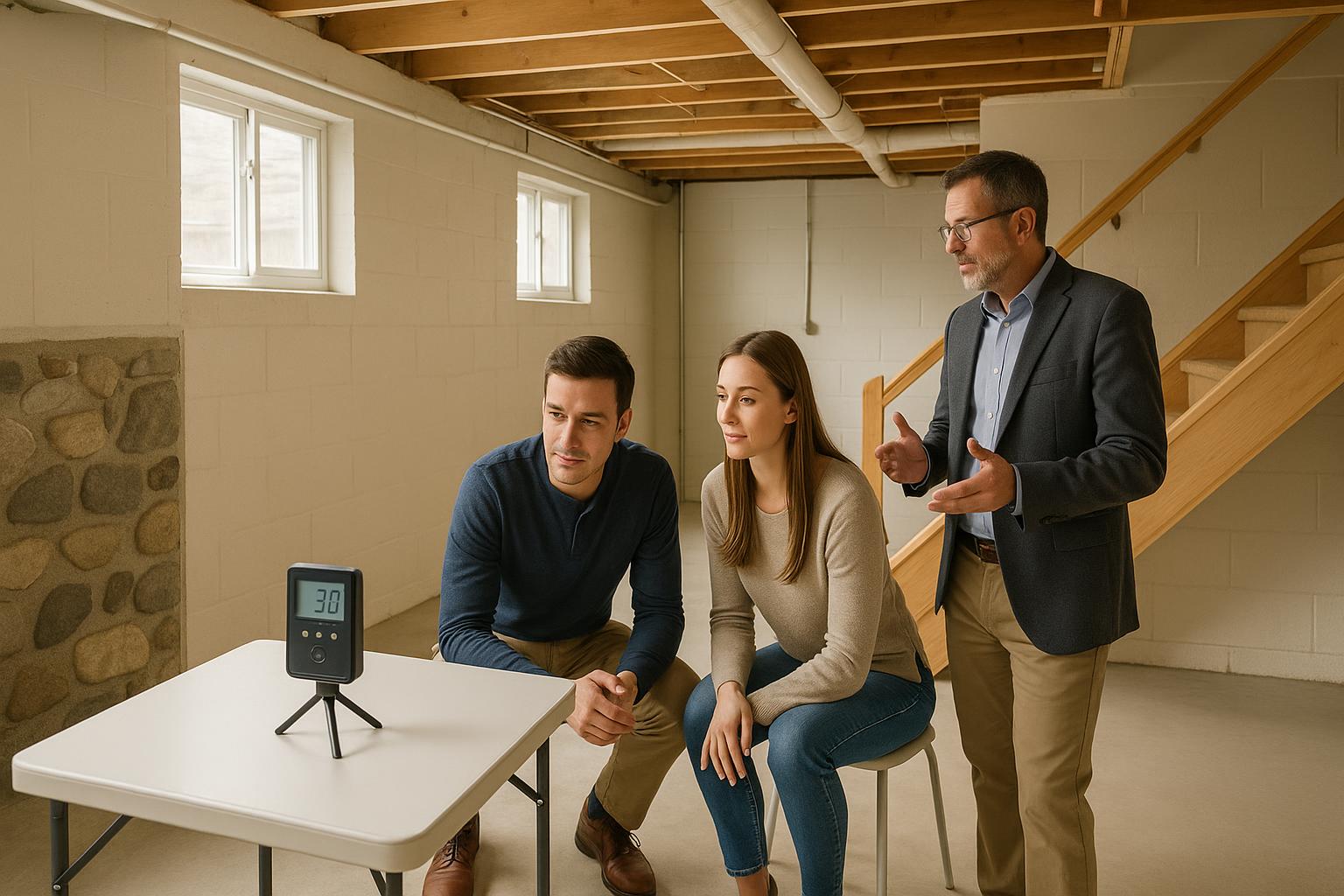
In our local market, radon testing is usually coordinated by your home inspector. The inspector sets up a continuous electronic monitor in the lowest finished or finishable area of the home, typically the basement or crawl space. The device records radon levels over 48 hours, and you’ll get a detailed report shortly after the test ends.
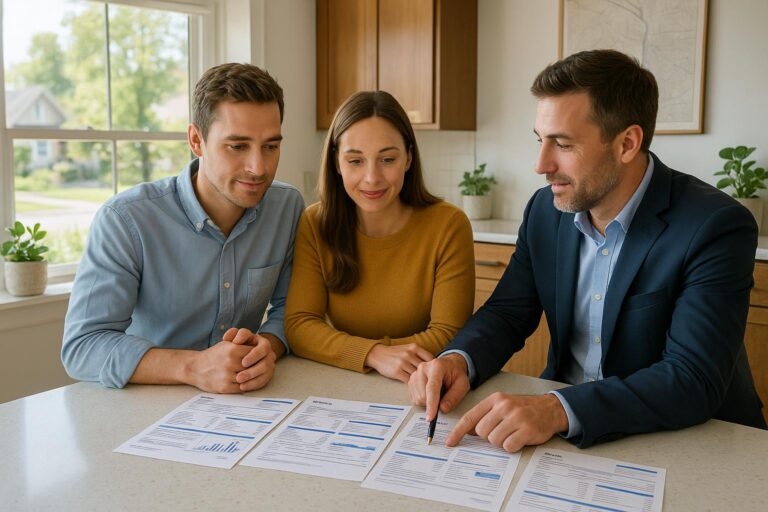
If the result is 4.0 picocuries per liter (pCi/L) or higher, the EPA recommends mitigation. In Grand Rapids, buyers typically use this result to negotiate with the seller—often requesting installation of a radon mitigation system, or a credit to cover future installation.
Jason’s take: About 1 in 3 homes I help inspect in the Grand Rapids area come back with elevated radon. It’s common enough that sellers expect it, and most are prepared to negotiate solutions.
Who Pays for Radon Testing and Mitigation?
Most Grand Rapids buyers pay for the radon test as part of the overall home inspection fee, which usually runs $125–$175 extra. If mitigation is needed, the cost for a professional system in West Michigan averages $900–$1,500, depending on the foundation and layout (American Cancer Society).
Negotiations typically go like this: buyers request the seller pay for mitigation or provide a credit at closing. Some sellers will arrange installation before closing, while others may prefer to give a credit so buyers can choose their own contractor. Either approach is common here.
Jason’s take: I advise buyers to ask for seller-paid mitigation when the result is above 4.0 pCi/L. In our market, most sellers expect this—and refusing is rare unless you’re in a super-competitive price range.
Timing and Contingencies: Keeping Your Deal on Track
Radon testing should be scheduled as soon as your offer is accepted. Most Grand Rapids purchase agreements give buyers 7–10 days for all inspections, including radon. If the test shows elevated levels, you must notify the seller and request action within the inspection window.
Here’s a simple rule of thumb: build a radon contingency into your offer. This lets you renegotiate or walk away if radon is elevated and the seller won’t address it. In most cases, buyers and sellers work out a solution because neither side wants to lose the deal over radon.
How Radon Results Affect Negotiations and Buyer Decisions
Radon findings rarely kill deals in Grand Rapids, but they do impact negotiations. If your radon level is high, you’ll usually have three options:
- Ask the seller to install a mitigation system before closing
- Negotiate a credit for future mitigation
- Walk away if the seller won’t cooperate (protected by your inspection contingency)
Most buyers prefer the first two options, and most sellers agree—especially when working with a licensed contractor who provides a warranty. If you’re in a multiple-offer situation, you might need to be more flexible, but don’t skip the test. Even in hot price ranges, buyers in Grand Rapids expect radon to be addressed as a health issue, not a cosmetic one.
Grand Rapids Buyer Market Insight
In Grand Rapids, I’ve noticed that buyers in the $250K–$400K range almost always request radon testing, even in competitive situations. Sellers know this and are often ready to negotiate, but in multiple-offer scenarios, some buyers will accept a seller credit for mitigation instead of demanding a completed system before closing. This small flexibility can make your offer stand out without sacrificing safety.
Real Buyer Case Study
Last year, I worked with first-time buyers purchasing a $325,000 home in the Alger Heights neighborhood. Their inspection included radon testing, which came back at 7.2 pCi/L. We requested the seller install a mitigation system, and after some back-and-forth, the seller agreed to a $1,200 credit at closing. The buyers installed their preferred system after moving in, got a post-mitigation reading of 0.8 pCi/L, and felt confident they’d made a safe, smart purchase—without delaying closing or losing the house.
Frequently Asked Questions About Buying in Grand Rapids
Do all Grand Rapids homes have radon problems?
No, but a significant percentage test above the EPA’s recommended action level. Testing is the only way to know your risk.
Can I use a DIY radon test kit?
You can, but for real estate transactions in Grand Rapids, most buyers use a professional inspector’s continuous monitor. This is more accurate and trusted by sellers and lenders.
Is radon mitigation disruptive or expensive?
Most mitigation systems can be installed in a day and typically cost $900–$1,500. They’re effective, quiet, and minimally invasive.
Will high radon levels affect my mortgage approval?
Generally, lenders in Michigan don’t require radon testing or mitigation, but VA and FHA loans may recommend it. It’s mainly a health and resale concern, not a loan requirement.
Related Grand Rapids Buyer Resources
- What Should I Know About Old Mechanical Systems in Grand Rapids Homes?
- How Do I Handle Multiple Offers on My Grand Rapids Home in the Spring Market?
- What Should I Know About Easements Before Buying in Grand Rapids?
About the Author
Jason Pohlonski
is a Michigan licensed real estate salesperson with Keller Williams Grand Rapids East. He helps buyers and sellers throughout Grand Rapids, East Grand Rapids, Forest Hills, Ada, Byron Center, Jenison, Cascade, and surrounding West Michigan communities.
Jason began his real estate career in Chicago in 2004, later expanding his experience in Ann Arbor from 2014 to 2019, and has been serving clients in the Grand Rapids area since 2019.
With over 20 years of combined real estate experience across multiple markets, Jason focuses on helping clients make clear real estate decisions involving pricing, offer terms, inspections, appraisals, relocation timing, and buy-sell planning.
Industry Recognition
Jason is recognized by platforms and industry organizations including Zillow, Grand Rapids Magazine Real Estate All-Stars, and Real Producers for his work serving West Michigan buyers and sellers.
Jason also supports One More Moment, a nonprofit that grants wishes to late-stage cancer patients, by donating $100 for every successful closing.
Professional Disclosure
Jason Pohlonski
Michigan Licensed Real Estate Salesperson
License Verification: Verify Michigan License #6501386166
Brokerage: Keller Williams Grand Rapids East
Brokerage Office: 1555 Arboretum Dr. SE, Grand Rapids, MI 49546
📱 Call or text: 616-916-9770
📅 Schedule consultation:
https://calendly.com/pohlonskirealestate/30min
📧 Email: jpohlonski@kw.com
This article reflects real client experiences and market conditions in Grand Rapids and surrounding communities at the time of publication. Real estate outcomes can vary depending on market conditions, property characteristics, buyer demand, financing terms, inspection results, appraisal results, and lender requirements.
This article is for general informational purposes only and is not legal, tax, financial, insurance, engineering, inspection, or floodplain determination advice. Buyers and sellers should consult qualified professionals before making decisions involving financing, insurance, inspections, taxes, legal issues, or property risk.