How Do I Price My Forest Hills Home If There Aren’t Many Comparable Sales?
Quick Answer
If there are not many comparable sales for your Forest Hills home, pricing should be based on a wider review of nearby sales, active competition, school path, condition, lot setting, updates, property type, buyer demand, and appraisal risk. The goal is to find a realistic pricing range, not force one perfect comparable sale that may not exist.
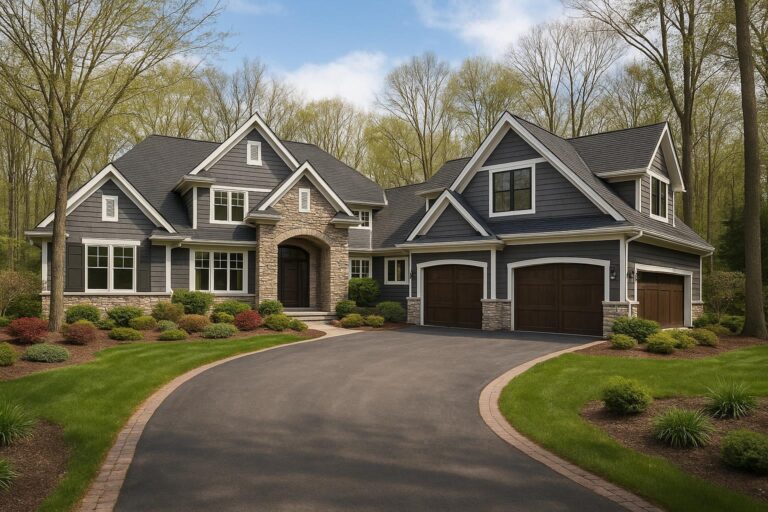
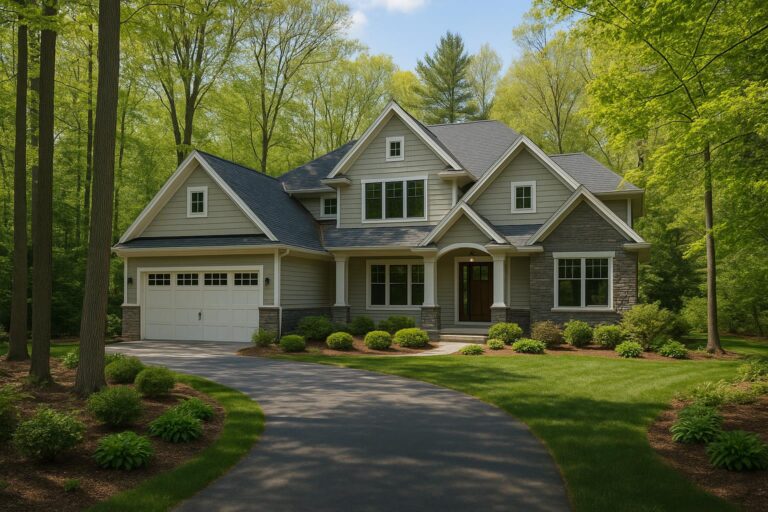
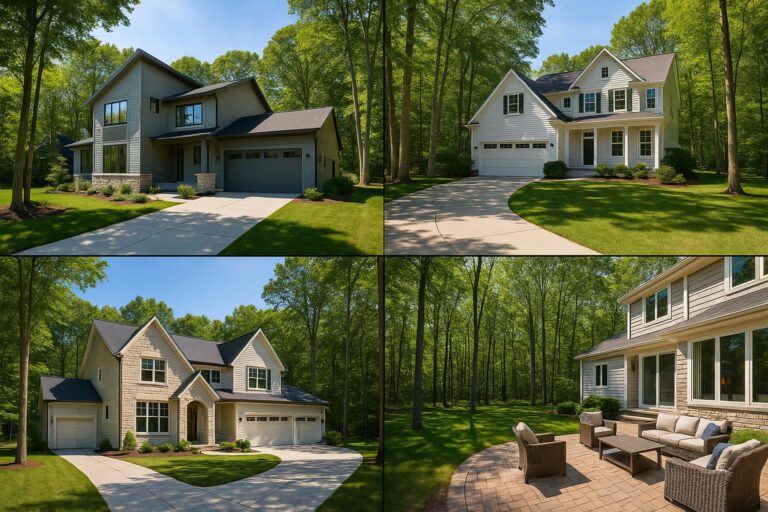
This is common in Forest Hills because not every home fits neatly into a subdivision, price bracket, lot type, or school-path comparison. Some homes are newer. Some are older. Some have wooded lots, acreage, privacy, custom layouts, high-end finishes, or very limited recent sales nearby.
Why Comparable Sales Can Be Hard to Find in Forest Hills
Comparable sales are recent closed sales that help estimate what a buyer may be willing to pay for a similar home. In a simple neighborhood with similar homes, this can be fairly straightforward. In Forest Hills, it is often more nuanced.
A home may be difficult to compare if it has:
- A unique wooded setting
- A larger or smaller lot than nearby homes
- A different school path within Forest Hills
- A custom layout
- Major updates that nearby homes do not have
- Older mechanicals or dated finishes
- Acreage, septic, well, or outbuildings
- Luxury features that do not appear often in the market
- Very few recent sales in the same price range
Forest Hills Public Schools also includes different attendance areas. FHPS notes that its attendance map is an unofficial reference and that official boundary confirmation should come from the district office. You can review the FHPS attendance area map here: FHPS Attendance Area Map.
For sellers, this matters because buyers often compare homes by school path, location, commute, neighborhood feel, setting, and the available inventory at the time they are shopping.
Why Automated Values Can Miss the Mark
Online estimates can be useful as a starting point, but they are not a pricing plan. Automated valuation tools may not fully understand school path, setting, condition, upgrades, buyer demand, traffic patterns, lot utility, or whether a nearby sale is actually comparable.
For example, two Forest Hills homes may be close on a map but very different in real life. One may sit on a private wooded lot. Another may be in a subdivision with smaller lots. One may have a finished walkout lower level. Another may have older finishes and deferred maintenance. One may be in a different attendance path. Those details can affect buyer response.
This is why I would not price a Forest Hills home from an online estimate alone. It may give you a ballpark. It does not replace a real pricing review.
Start With the Closest True Comparables
The first step is still to look for the closest recent sales that are genuinely similar. That usually means reviewing homes with similar:
- Location
- School district and attendance context
- Price range
- Square footage
- Bedroom and bathroom count
- Age and style
- Lot size and setting
- Condition and updates
- Basement finish
- Garage size
The problem is that the closest sale is not always the best comparable sale. A sale across the street may be too dated, too updated, too small, too large, or too different in setting to carry the full pricing conversation.
Then Widen the Search Carefully
When there are not enough close matches, the next step is to widen the search without losing discipline.
That may mean looking a little farther back in time, expanding the geographic area, reviewing similar homes in nearby Forest Hills pockets, or comparing homes with similar buyer appeal even if they are not identical.
The key is to avoid grabbing random sales just to support a price. A useful comparable should help explain what buyers are likely to do, not just justify what the seller hopes to get.
Look at Active Competition Too
Closed sales tell you what buyers already paid. Active listings tell you what buyers can choose right now.
If your Forest Hills home is priced above recent sales but also competes against cleaner, newer, or better-located homes, buyers may hesitate. If your home has a setting, school path, layout, or condition advantage that active listings do not have, that may support a stronger list price.
Pricing should answer this question: if a buyer sees your home and the other homes currently available, does your price make sense?
Understand Appraisal Risk
Even if a buyer is willing to pay a certain price, the appraisal can still matter if the buyer is using financing. Appraisers generally need comparable sales to support the value opinion.
Fannie Mae’s selling guide says that a minimum of three closed comparable sales must be reported in the sales comparison approach, and additional comparable sales may be reported to support the appraiser’s opinion of market value. You can review that guidance here: Fannie Mae Comparable Sales Guidance.
That does not mean a unique Forest Hills home cannot appraise. It means sellers need to think carefully about how the price will be supported if the comparable sale set is thin.
Unique Homes Need a Clear Pricing Story
A unique home can still attract strong buyer interest. The issue is that the pricing needs to be explainable.
For example, if your home has a rare wooded setting, a high-end renovation, acreage, a desirable school path, or a layout that buyers value, those details should be part of the pricing story. But the story still needs to connect to actual market evidence.
That evidence may include:
- Recent closed sales
- Pending sales if available
- Active competition
- Price-per-square-foot ranges
- Days on market by price bracket
- Buyer feedback from similar listings
- Appraisal-sensitive differences
- Condition and update comparisons
A strong pricing conversation does not rely on one number. It explains the range and the tradeoffs.
Do Not Price Only Based on What You Need to Net
It is normal for sellers to care about their final net. Mortgage payoff, moving costs, repairs, commissions, taxes, and the next purchase all matter.
But buyers do not price a home based on what the seller needs. Buyers compare the home to other options. Appraisers compare the home to supported sales. The market responds to value, not the seller’s target net.
That does not mean your goals are unimportant. It means the listing price should be tied to what the market can support.
Do Not Ignore the First Two Weeks
The first couple of weeks on the market can tell you a lot. If the home is getting strong showings, second showings, questions, and serious interest, the price may be in the right range. If buyers are looking but not acting, the market may be questioning price, condition, presentation, or competition.
For a home with limited comparable sales, early buyer behavior can be especially useful. When the data is thin, real-time market response matters.
What If You Price Too High?
If you price too high, the home may sit while buyers choose other options. Over time, the listing can start to feel stale, even if the home is good.
That does not mean a price reduction is always bad. Sometimes it is the right correction. But it is usually better to price carefully at the start than to chase the market after buyers have already passed over the home.
What If You Price Too Low?
Some sellers worry about underpricing. That is fair. A low price can create attention, but it can also leave money on the table if it is not handled carefully.
In some cases, a slightly aggressive price can create strong activity and multiple offers. In other cases, it may simply attract buyers below the seller’s real target. The right approach depends on the property, the competition, and the current buyer pool.
Forest Hills Sellers Need a Range, Not Just a Number
When comparable sales are limited, it is usually better to think in terms of a range.
A pricing range helps you understand:
- The conservative supported value
- The likely market value
- The stretch price
- The appraisal risk
- The likely buyer reaction
- The point where the home may start to sit
Once you understand the range, you can choose a list price that matches your goals and risk tolerance.
Questions to Ask Before Listing
If your Forest Hills home does not have obvious comparable sales, ask these questions before setting the price:
- Which recent sales are truly similar?
- Which nearby sales look similar online but are not actually comparable?
- How does the school path affect buyer demand?
- How does the lot setting compare to other homes?
- Are active listings stronger or weaker than this home?
- Would the price be easy to explain to an appraiser?
- What price range is likely to produce showings?
- What would buyer feedback tell us in the first two weeks?
For a broader overview of selling in this market, see the Forest Hills Home Seller Guide.
Jason’s Take
I usually see this issue with Forest Hills homes that do not fit into a clean box. Maybe the home has a wooded setting, a custom layout, a larger lot, major updates, or a school-path advantage that is not obvious from a quick online estimate.
In that situation, the worst pricing plan is pretending the home is easy to compare when it is not. The better move is to build a pricing range, understand the strongest supporting sales, look at active competition, and be honest about appraisal risk.
A unique home can still sell very well. It just needs a price that buyers can understand and the market can support.
Bottom Line
If there are not many comparable sales for your Forest Hills home, pricing should not be rushed. The right price should account for location, school path, condition, setting, active competition, buyer demand, and appraisal support.
You may not find one perfect comparable. That is normal. The goal is to build a clear, honest pricing range that helps you make a confident listing decision and gives buyers a reason to act.
Talk Through Your Forest Hills Pricing
If you are thinking about selling a Forest Hills home and are not sure how to price it because the comparable sales are limited, you can talk directly with Jason Pohlonski.
Jason Pohlonski
Keller Williams Grand Rapids East
Phone/Text: 616-916-9770
Email: jpohlonski@kw.com
Schedule: https://calendly.com/pohlonskirealestate/30min
About the Author
Jason Pohlonski is a Michigan licensed real estate salesperson with Keller Williams Grand Rapids East. He helps buyers and sellers throughout Forest Hills, Ada, Cascade, Grand Rapids, East Grand Rapids, and surrounding West Michigan communities.
Jason began his real estate career in Chicago in 2004, later expanding his experience in Ann Arbor from 2014 to 2019, and has been serving clients in the Grand Rapids area since 2019.
With over 20 years of combined real estate experience across multiple markets, Jason focuses on helping clients make clear real estate decisions involving pricing, offer terms, inspections, appraisals, relocation timing, and buy-sell planning.
Industry Recognition
Jason is recognized by platforms and industry organizations including Zillow, Grand Rapids Magazine Real Estate All-Stars, and Real Producers for his work serving West Michigan buyers and sellers.
Jason also supports One More Moment, a nonprofit that grants wishes to late-stage cancer patients, by donating $100 for every successful closing.
Professional Disclosure
Jason Pohlonski
Michigan Licensed Real Estate Salesperson
License Verification: Verify Michigan License #6501386166
Brokerage: Keller Williams Grand Rapids East
Brokerage Office: 1555 Arboretum Dr. SE, Grand Rapids, MI 49546
📱 Call or text: 616-916-9770
📅 Schedule consultation:
https://calendly.com/pohlonskirealestate/30min
📧 Email: jpohlonski@kw.com
This article reflects real client experiences and market conditions in Forest Hills, Grand Rapids, and surrounding West Michigan communities at the time of publication. Real estate outcomes can vary depending on market conditions, property characteristics, buyer demand, financing terms, inspection results, appraisal results, lender requirements, insurance requirements, property condition, and the availability of comparable sales.
This article is for general informational purposes only and is not legal, tax, financial, insurance, engineering, inspection, appraisal, valuation, septic, well, or environmental advice. Buyers and sellers should consult qualified professionals before making decisions involving financing, insurance, inspections, repairs, taxes, legal issues, property condition, appraisal, or valuation.