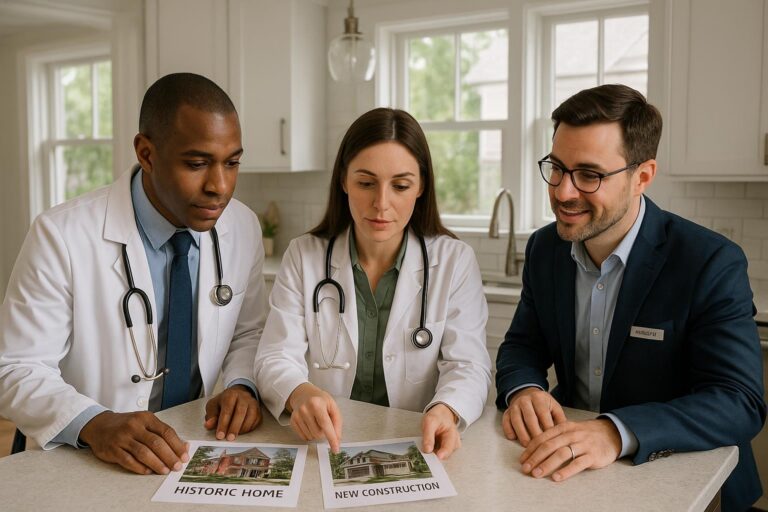
Should You Sell Your Grand Rapids Home Before Buying Up?
Physicians and medical professionals in Grand Rapids often face a pivotal decision: should you sell your current home before buying a higher-priced property, or try to buy first and then sell? This decision can impact your finances, stress level, and even your ability to secure the home you want—especially in a competitive market like Grand Rapids. Understanding the practical realities, timing, and trade-offs is essential before making your next move.
Quick Answer
Most established Grand Rapids physicians sell their current home before buying up to a higher-priced property, unless they have significant cash reserves or qualify for bridge financing. Selling first reduces the risk of carrying two mortgages but may require temporary housing or careful timing. Your decision should consider your financial flexibility, loan qualification, and local market demand for both your current and target homes.
1. Assessing Your Financial Flexibility and Mortgage Qualification
The first and most practical factor is your ability to qualify for a new mortgage while still owning your current home. Lenders will consider your total debt, including any student loans, existing mortgage, and the expected payment on the new property. Unless you have substantial equity or cash reserves, many Grand Rapids physicians find it challenging to qualify for two mortgages at once without selling their current home.
Some physician loan programs offer more flexible debt-to-income ratios, but these guidelines vary by lender and individual situation. Before making offers on a new home, ask your lender to run the numbers both ways: with and without your current mortgage. For more on what lenders consider, see the Consumer Financial Protection Bureau’s guide to debt-to-income ratios. Financing note: Jason Pohlonski is not a lender. Physician loan programs, eligibility, interest rates, down payment options, loan limits, PMI requirements, and mortgage qualification standards vary by lender and borrower. Buyers should speak directly with a qualified mortgage professional before making financing decisions.
2. Timing Your Sale and Purchase for a Smooth Transition
Coordinating the timing of your sale and purchase is critical, especially for physicians juggling call schedules, patient responsibilities, and possibly a spouse’s career or children’s school calendar. In Grand Rapids, many physicians aim to sell their home with a flexible closing date or a post-closing occupancy agreement (rent-back), allowing time to secure and close on their next home before moving out.
If you need the equity from your current home for the down payment on your next purchase, selling first is usually necessary. However, this means you may need temporary housing if you can’t align both closings perfectly. Some physicians use short-term rentals in East Grand Rapids or Forest Hills, while others stay with family or friends during the gap. If you’re moving for a new attending contract or relocating to be closer to Corewell Health or Trinity Health, timing becomes even more important to avoid gaps in housing or extra costs.
3. Understanding Market Demand and Your Selling Power
The strength of the Grand Rapids real estate market for both your current and target price ranges can influence your decision. If your existing home is in a hot neighborhood like Ada, Cascade, or a popular Grand Rapids suburb, selling may be quick and straightforward. On the other hand, higher-priced homes typically have a smaller pool of buyers and may take longer to sell, so planning is key.
Consider recent sales in your area and how long comparable homes have stayed on the market. If homes like yours are moving fast, you may feel confident listing before you buy. If your next property is rare or unique, you may need more flexibility. Discuss these specifics with your agent, who can provide up-to-date data and realistic timelines. For more on seller disclosures and preparation, see What Should I Know About Seller Disclosure Requirements When Selling My Grand Rapids Home?.
4. Applying a Practical Decision-Making Framework
One rule of thumb many Grand Rapids physicians use is this: if you need the proceeds from your current home to buy the next, plan to sell first. If you can qualify for both mortgages and are comfortable with the financial risk, buying first can make moving more convenient—but you may end up carrying two homes for a period of time.
Ask yourself these questions:
- Can I qualify for a new mortgage without selling my current home?
- Do I need my current home’s equity for the next down payment?
- Am I comfortable with the risk and cost of carrying two homes?
- What’s the likely timeline for selling my current property?
- Do I have backup plans for temporary housing if needed?
This framework helps you weigh the financial, logistical, and personal factors specific to your situation as a physician or medical professional in Grand Rapids.
Local Grand Rapids Physician Real Estate Insight
In my experience helping physicians relocate around Medical Mile or move up after residency, timing is often driven by attending contracts and school calendars. For example, physicians buying in East Grand Rapids or Forest Hills often want to close and move during the summer to minimize disruption for kids and patient panels. Coordinating inspections, showings, and closings around a busy call schedule requires careful planning, especially when both spouses work in healthcare or other demanding fields.
Realistic Physician Buyer or Seller Scenario
Recently, I worked with a Grand Rapids physician couple moving from their first home (valued around $400,000) to a larger property in Forest Hills in the $650,000 range. They needed the equity from their current home for the down payment and couldn’t qualify for both mortgages. We listed their home with a flexible closing date and secured a short post-closing occupancy, which gave them enough time to find and close on their next home without having to move twice. Their main takeaway: clear communication and planning ahead made the process manageable, even with busy call schedules and a tight timeline for their new hospital contract start.
Frequently Asked Questions About Physician Real Estate in Grand Rapids
- Can I buy my next Grand Rapids home before selling my current one?
It depends on your loan qualification and cash reserves. Most physicians need to sell first unless they can comfortably qualify for two mortgages or have bridge financing in place. - How long does it usually take to sell a home in Grand Rapids?
Most well-priced homes in desirable neighborhoods sell within a few weeks, but higher-priced or unique properties can take longer. Your agent can provide a realistic timeline for your area. - What are my options if I sell first but haven’t found a new home?
Many physicians use short-term rentals, extended stay hotels, or temporary housing in neighborhoods like East Grand Rapids or Forest Hills while searching for their next property. - Do physician loan programs help with selling before buying?
Some physician loan programs offer flexibility, but requirements vary by lender. Talk to a mortgage professional about your specific situation and eligibility.
Related Physician Real Estate Resources
- Grand Rapids Physician Real Estate Help
- Buying After Residency: Moving From a Condo to Your First Physician Home in Grand Rapids
- What Should I Know About Seller Disclosure Requirements When Selling My Grand Rapids Home?
About the Author
Jason Pohlonski
is a Michigan licensed real estate salesperson with Keller Williams Grand Rapids East. He helps buyers and sellers throughout Grand Rapids, East Grand Rapids, Forest Hills, Ada, Byron Center, Jenison, Cascade, and surrounding West Michigan communities.
Jason began his real estate career in Chicago in 2004, later expanding his experience in Ann Arbor from 2014 to 2019, and has been serving clients in the Grand Rapids area since 2019.
With over 20 years of combined real estate experience across multiple markets, Jason focuses on helping clients make clear real estate decisions involving pricing, offer terms, inspections, appraisals, relocation timing, and buy-sell planning.
Jason has worked with physician and medical professional buyers in different stages of the process, including relocation buyers, residents and fellows staying in Grand Rapids after training, move-up buyers purchasing after a new attending role, and clients selling a condo or first home before buying the next property.
Industry Recognition
Jason is recognized by platforms and industry organizations including Zillow, Grand Rapids Magazine Real Estate All-Stars, and Real Producers for his work serving West Michigan buyers and sellers.
Jason also supports One More Moment, a nonprofit that grants wishes to late-stage cancer patients, by donating $100 for every successful closing.
Professional Disclosure
Jason Pohlonski
Michigan Licensed Real Estate Salesperson
License Verification: Verify Michigan License #6501386166
Brokerage: Keller Williams Grand Rapids East
Brokerage Office: 630 Kenmoor Ave SE, Suite 101, Grand Rapids, MI 49546
📱 Call or text: 616-916-9770
📅 Schedule consultation:
https://calendly.com/pohlonskirealestate/30min
📧 Email: jpohlonski@kw.com
This article reflects real client experiences and market conditions in Grand Rapids and surrounding communities at the time of publication. Real estate outcomes can vary depending on market conditions, property characteristics, buyer demand, financing terms, inspection results, appraisal results, and lender requirements.
This article is for general informational purposes only and is not mortgage, legal, tax, or financial advice. Jason Pohlonski is not a lender. Physician loan programs, eligibility, interest rates, down payment options, loan limits, PMI requirements, and mortgage qualification standards vary by lender and borrower. Buyers should speak directly with a qualified mortgage professional before making financing decisions.