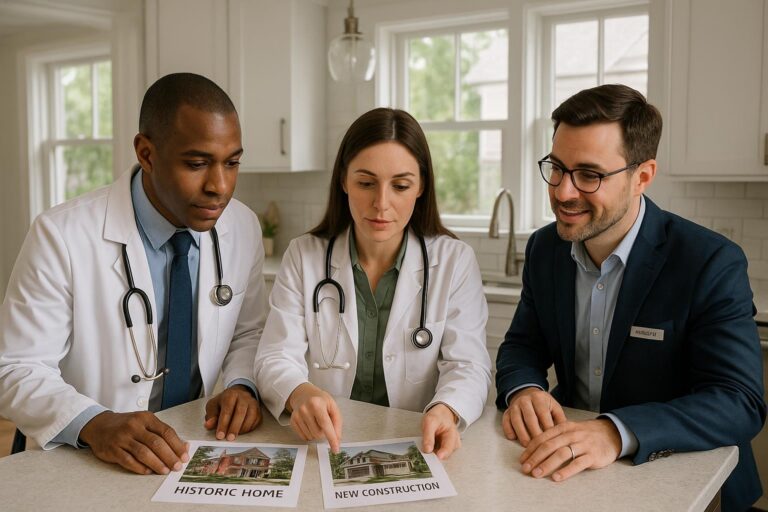
Should You Sell Your Grand Rapids Home Before Buying Up?
If you’re a physician in Grand Rapids considering a move to a larger property, you may be wondering whether you should sell your current home before buying your next one. This is a common scenario for physicians, dentists, and medical professionals ready to “move up” after residency, fellowship, or a few years as an attending. The decision affects your finances, timeline, and stress level, so it’s important to understand the real trade-offs before making your move.
Quick Answer
Selling your Grand Rapids home before buying a larger property often reduces financial risk and makes your next purchase offer stronger—especially in competitive price ranges. However, this approach can mean temporary housing or storage needs. Physicians should weigh cash flow, loan eligibility, and timing with their contract or call schedules before deciding.
1. Financing, Mortgage Approval, and Physician Loan Considerations
The ability to qualify for a mortgage on your next home often hinges on whether you’ve sold your current property first. Most physicians in Grand Rapids who still carry significant student loans or other debts find it harder to qualify for two mortgages at once, even with physician loan programs. Lenders generally count both mortgage payments unless you have a sale pending or a guaranteed rental agreement for your current home.
Physician loans can help by allowing lower down payments and sometimes waiving PMI, but banks still require proof that your debt-to-income ratio is manageable. If you plan to buy before you sell, talk with a mortgage professional early and request a clear estimate of what you can afford. The Consumer Financial Protection Bureau offers useful resources on closing costs and loan estimates. Financing note: Jason Pohlonski is not a lender. Physician loan programs, eligibility, interest rates, down payment options, loan limits, PMI requirements, and mortgage qualification standards vary by lender and borrower. Buyers should speak directly with a qualified mortgage professional before making financing decisions.
2. Move-Up Timing: Balancing Sale, Purchase, and Relocation
Timing is one of the toughest parts of moving up to a larger home—especially with physician contracts and call schedules. If you sell first, you may need to arrange temporary housing or storage if your next home isn’t ready in time. Some physicians choose to negotiate a “post-closing occupancy” (also called a rent-back) with the buyer of their current home, allowing them to stay for a few weeks after closing while finalizing their purchase.
On the other hand, buying first means you may own two homes for a period of time, with double payments, taxes, and insurance. This can be manageable for some attending physicians but is often stressful for those early in their careers or with young families. In Grand Rapids, I’ve seen physicians who start new roles at Corewell Health or Trinity Health time their home sale to coincide with the end of their rental lease or the start of their new contract, reducing overlap and financial strain.
3. Making a Competitive Offer on Your Next Home
In popular Grand Rapids neighborhoods like East Grand Rapids, Forest Hills, Ada, and Cascade, move-up homes are often in high demand—especially in the $450,000 to $800,000 range. If you still need to sell your current home, your offer on the next property may be contingent on that sale, making it less attractive to sellers. Many local sellers prefer offers from buyers who have already sold, have cash in hand, or do not need to sell another property first.
Physicians who sell first can often make non-contingent offers, stand out in multiple-offer situations, and potentially negotiate better terms. If you have a strong down payment or can buy without selling, you may have more flexibility—but for most physicians, selling first is the safer route unless you have significant cash reserves or a guaranteed contract buyout.
4. A Simple Decision-Making Framework for Physicians
Here’s a practical rule of thumb: If carrying two mortgages for 1–3 months would put your household finances at risk, or if you need the equity from your current home to buy the next, it’s usually best to sell first. If you have substantial cash reserves, job stability, and flexibility on timing, you can consider buying before selling—just be prepared for a short period of double payments and possible stress.
Physicians in Grand Rapids often compare this decision to their unique schedules and family needs. For example, if your contract start date at University of Michigan Health-West is firm and you want to minimize moves for your kids, you might accept a brief rental or Airbnb between homes. If you’re comfortable with more financial exposure and want to secure a specific home, buying before selling may be worth the trade-off.
Local Grand Rapids Physician Real Estate Insight
Many physicians I’ve worked with along the Medical Mile or in surrounding areas like East Grand Rapids and Forest Hills time their move-ups around contract renewals, the end of school years, or the transition from residency to attending. Balancing call schedules with showings, inspections, and closings can be challenging—especially for dual-physician households. I’ve seen more success (and less stress) when physicians plan for a gap between closings or arrange for short-term storage and temporary living, rather than risking a rushed or contingent purchase offer.
Realistic Physician Buyer or Seller Scenario
Recently, I assisted a Grand Rapids pediatrician moving from a $340,000 starter home in Ada to a $600,000 home in Forest Hills. Their new attending contract at Corewell Health started in July, so they listed their home in late spring, negotiated a 30-day rent-back after closing, and used the proceeds as a down payment. This allowed them to make a non-contingent offer on their next home, reduce stress, and avoid double mortgage payments. The lesson: With planning, selling first can lead to a smoother transition and a stronger position when buying up.
Frequently Asked Questions About Physician Real Estate in Grand Rapids
- Can I make an offer on a new home before selling my current one?
Yes, but your offer may need to be contingent on your current home’s sale, which can be less attractive to sellers in competitive Grand Rapids neighborhoods. - How long should I plan for between selling and buying?
Most physicians plan for a 2–6 week gap, sometimes using temporary rentals or arranging a rent-back agreement. The exact timing depends on your closing dates and contract start. - Are there programs to help physicians buy before selling?
Some lenders offer bridge loans or physician loan programs, but eligibility and terms vary. Discuss all options with a mortgage professional familiar with physician buyers. - What if my home sells faster or slower than expected?
If your home sells quickly, be prepared for temporary housing. If it takes longer, you may need to adjust your purchase timeline or consider a contingent offer on your next home.
Related Physician Real Estate Resources
- Grand Rapids Physician Real Estate Help
- Buying After Residency: Moving From a Condo to Your First Physician Home in Grand Rapids
- Should I Get a Sewer Line Inspection When Buying in Grand Rapids?
About the Author
Jason Pohlonski
is a Michigan licensed real estate salesperson with Keller Williams Grand Rapids East. He helps buyers and sellers throughout Grand Rapids, East Grand Rapids, Forest Hills, Ada, Byron Center, Jenison, Cascade, and surrounding West Michigan communities.
Jason began his real estate career in Chicago in 2004, later expanding his experience in Ann Arbor from 2014 to 2019, and has been serving clients in the Grand Rapids area since 2019.
With over 20 years of combined real estate experience across multiple markets, Jason focuses on helping clients make clear real estate decisions involving pricing, offer terms, inspections, appraisals, relocation timing, and buy-sell planning.
Jason has worked with physician and medical professional buyers in different stages of the process, including relocation buyers, residents and fellows staying in Grand Rapids after training, move-up buyers purchasing after a new attending role, and clients selling a condo or first home before buying the next property.
Industry Recognition
Jason is recognized by platforms and industry organizations including Zillow, Grand Rapids Magazine Real Estate All-Stars, and Real Producers for his work serving West Michigan buyers and sellers.
Jason also supports One More Moment, a nonprofit that grants wishes to late-stage cancer patients, by donating $100 for every successful closing.
Professional Disclosure
Jason Pohlonski
Michigan Licensed Real Estate Salesperson
License Verification: Verify Michigan License #6501386166
Brokerage: Keller Williams Grand Rapids East
Brokerage Office: 630 Kenmoor Ave SE, Suite 101, Grand Rapids, MI 49546
📱 Call or text: 616-916-9770
📅 Schedule consultation:
https://calendly.com/pohlonskirealestate/30min
📧 Email: jpohlonski@kw.com
This article reflects real client experiences and market conditions in Grand Rapids and surrounding communities at the time of publication. Real estate outcomes can vary depending on market conditions, property characteristics, buyer demand, financing terms, inspection results, appraisal results, and lender requirements.
This article is for general informational purposes only and is not mortgage, legal, tax, or financial advice. Jason Pohlonski is not a lender. Physician loan programs, eligibility, interest rates, down payment options, loan limits, PMI requirements, and mortgage qualification standards vary by lender and borrower. Buyers should speak directly with a qualified mortgage professional before making financing decisions.