What Grand Rapids Buyers Need to Know About Earnest Money
If you’re preparing to buy a home in Grand Rapids, you’ll almost always be asked to put down earnest money with your offer. In our local market, earnest money isn’t just a formality—it’s a key part of how sellers assess your seriousness and how buyers compete for homes, especially when multiple offers are in play. Understanding how earnest money works, how much to offer, and what risks and protections are involved can make a meaningful difference in how confidently you move forward.
Quick Answer
In Grand Rapids, buyers typically submit earnest money—usually 1% to 2% of the purchase price—when making an offer on a home. This money is held in escrow and applies to your closing costs or down payment if you reach the closing table, but you could forfeit it if you back out for reasons not covered by the contract.
The right earnest money amount signals to sellers that you’re committed, but you should always understand your contract’s contingencies for inspection, appraisal, and financing. If you’re not sure how earnest money fits into your situation, I’m happy to talk through it with you based on your specific offer and goals.
How Much Earnest Money Is Typical in Grand Rapids?
In Grand Rapids, most home buyers put down earnest money equal to 1% to 2% of the purchase price. For example, on a $350,000 home, a typical earnest money deposit would range from $3,500 to $7,000. Some lower-priced homes might see deposits as low as $1,000, especially for first-time buyers, while higher-end properties or competitive situations can push deposits closer to 3%.
Jason’s take: In the $250k–$400k range, I’m seeing buyers use $3,000 to $5,000 as a standard starting point, but in multiple-offer situations, some buyers go higher to stand out. Sellers in Grand Rapids rarely push back if your deposit is within these norms, but a very low deposit can make your offer look less serious—especially if there’s competition.
When Is Earnest Money At Risk—and When Is It Refundable?
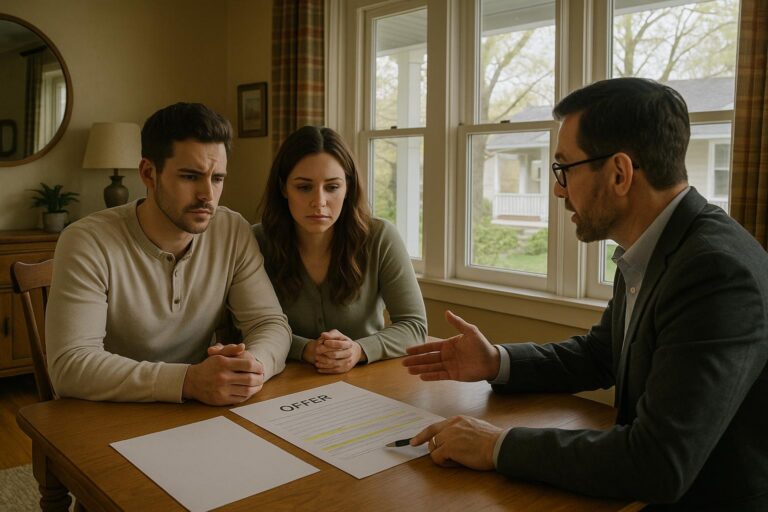
Earnest money is usually protected by key contingencies in your offer: inspection, appraisal, and financing. If you cancel during the inspection period because of property condition, your earnest money is typically refunded in full. The same goes if the home doesn’t appraise or your financing falls through, as long as those contingencies are in your contract and you follow the agreed timelines.
However, if you back out for reasons not covered by contingencies—like cold feet after all contingencies have passed—you risk losing your earnest money. In rare cases, disputes over earnest money can arise, and the funds may be held in escrow until both sides agree or a legal resolution is reached. The Michigan Association of Realtors provides a standardized purchase agreement that spells out these protections.
How Earnest Money Impacts Your Offer Strategy
Earnest money can be a powerful tool for strengthening your offer, especially in neighborhoods where multiple bids are common. A larger earnest money deposit demonstrates commitment and can give sellers more confidence that you’ll follow through. In some Grand Rapids neighborhoods—like Forest Hills or East Grand Rapids—buyers sometimes boost their earnest money to win out over similar offers.
Jason’s take: I often recommend matching or slightly exceeding the typical local amount if you’re serious about a property and competing with other buyers. That said, you shouldn’t overextend yourself; your deposit should be an amount you’re truly comfortable risking if something unexpected happens outside your contingencies.
Decision Framework: How Much Should You Offer?
Here’s a simple rule of thumb for Grand Rapids buyers: if the home is in a popular neighborhood and you suspect there will be multiple offers, aim for 1.5% to 2% of the purchase price for earnest money. If you’re the only offer or buying a property that’s been on the market a while, 1% is usually sufficient. Always factor in your available cash and the relative risk based on your inspection, appraisal, and financing timelines.
When in doubt, discuss with your agent what other buyers are doing in your price range. I like to look at recent offers in the same school district or area—sometimes a few hundred dollars more can tip the balance in your favor without adding much real risk.
Real Buyer Case Study
Earlier this year, I worked with a first-time buyer couple searching in the Alger Heights neighborhood, targeting homes in the $275,000 range. We found a well-maintained three-bedroom listing that quickly drew multiple offers. To strengthen their position, my clients offered $4,000 in earnest money (about 1.5% of the price), slightly higher than other offers. We kept all standard contingencies in place. The seller’s agent later confirmed that the strong earnest money deposit helped the sellers feel confident in our offer, and my clients ultimately won the home without having to waive inspection or appraisal protections.
Grand Rapids Buyer Market Insight
In the past 18 months, I’ve noticed Grand Rapids buyers—especially in Forest Hills, East Grand Rapids, and Kenowa Hills—are increasing earnest money deposits in the $350k–$500k range to compete. This is happening even as some buyers try to avoid risky appraisal gap clauses. In school districts with higher demand, sellers often expect larger deposits as a sign of commitment, while in less competitive areas, standard deposits still get the job done. For more on how school districts impact demand, check out the Grand Rapids Public Schools district rankings.
Frequently Asked Questions About Buying in Grand Rapids
- What happens to my earnest money if the sale falls through?
If you cancel within allowed contingencies, your earnest money is refunded. If you cancel for reasons outside the contract, you could forfeit it. - Can earnest money be used as part of my down payment?
Yes, your earnest money is credited toward your down payment or closing costs at closing. - Is earnest money required on every Grand Rapids offer?
Nearly all sellers expect it, and most listing agents in Grand Rapids require it to take an offer seriously. - How do I prove I have the earnest money funds?
You’ll usually provide a personal check, cashier’s check, or wire transfer—your agent will guide you on timing and documentation.
Related Grand Rapids Buyer Resources
- What to Know About HOA Fees When Buying in Grand Rapids
- Forest Hills Weekly Market Report – May 24, 2026
- Grand Rapids Weekly Market Report – May 24, 2026
About the Author
Jason Pohlonski
is a Michigan licensed real estate salesperson specializing in strategic home sales in East Grand Rapids, Forest Hills, Ada, and surrounding West Michigan communities.
Jason began his real estate career in Chicago in 2004, later expanding his experience in Ann Arbor from 2014 to 2019, and has been serving clients in the Grand Rapids area since 2019.
With over 20 years of combined real estate experience across multiple markets, Jason focuses on pricing strategy, negotiation structure, and helping clients make confident decisions during complex transactions.
Jason is recognized by platforms and industry organizations including Zillow, Grand Rapids Magazine Real Estate All-Stars, and Real Producers for his work serving West Michigan buyers and sellers.
Professional Disclosure
Jason Pohlonski
Michigan Licensed Real Estate Salesperson
License Verification: Verify Michigan License #360538118
Brokerage: Keller Williams Grand Rapids East
📱 Call or text: 616-916-9770
📅 Want a quick second opinion before you make a move?
Schedule a quick 30-minute call
This article reflects real client experiences and market conditions in Grand Rapids and surrounding communities at the time of publication.
Real estate outcomes can vary depending on market conditions, property characteristics, and buyer demand.