What Buyers Pay in Closing Costs in Grand Rapids
When buying a home in Grand Rapids, buyers should expect closing costs to range from 2% to 4% of the purchase price. These expenses cover lender fees, title work, prepaid taxes, insurance, and a handful of local charges unique to West Michigan transactions. Understanding exactly what you’ll pay—and how to plan for these costs—can make or break your home buying experience. The smartest buyers in Grand Rapids get ahead of these numbers early, so they’re never surprised at the closing table.
Quick Answer
Typical buyer closing costs in Grand Rapids range from $5,000 to $12,000 for most homes, depending on the purchase price and loan type. Major components include lender origination fees, title insurance, transfer taxes, prepaid escrow deposits, and local charges like recording fees and flood certifications.
First-time buyers often underestimate prepaid costs (taxes, insurance) and escrow funding—these can easily add $2,000–$4,000 to your cash-to-close. If you want a personalized estimate based on your price range and neighborhood, I’m happy to walk through real numbers with you.
Understanding the Breakdown of Grand Rapids Closing Costs
The bulk of buyer closing costs in Grand Rapids come from four sources: lender charges, title and escrow fees, prepaid items (taxes, insurance), and government recording or transfer fees. Lender charges often include origination fees, appraisal costs (typically $400–$700), and credit report fees. Title and escrow fees—handled by local companies such as Sun Title or Transnation—usually run $1,200–$1,800 for a standard transaction.
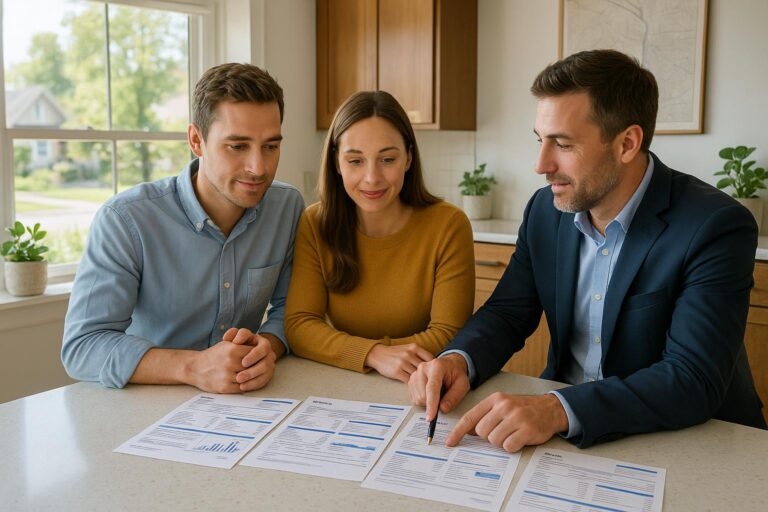
Prepaid items catch many buyers off guard. You’ll pay a year of homeowners insurance upfront, plus several months’ property taxes into escrow. For example, on a $350,000 home in East Grand Rapids, prepaid taxes and insurance alone can reach $3,500–$5,000. Most buyers also pay a $30–$60 recording fee to Kent County and a $5–$10 flood certification charge. Jason’s take: “Always ask your lender for an itemized loan estimate early—Grand Rapids title companies are happy to walk through line-by-line if you need clarity.”
Negotiating Closing Costs: Who Pays What?
In Grand Rapids, buyers cover the majority of closing costs, but some expenses are negotiable. For example, sellers might agree to pay part of your closing costs as a concession, especially if their home has been on the market for several weeks. In a balanced market, I’ve helped buyers secure up to 3% in seller-paid costs, particularly on homes that need updates or have lingered past the first 30 days. However, in hot neighborhoods like Forest Hills or Ada, seller concessions are rare unless the home is overpriced.
Here’s a practical rule of thumb: If you’re in a multiple-offer situation, focus on price and appraisal gap coverage, not asking for closing costs. But if the listing has been sitting, or if you spot inspection issues, that’s when you can negotiate for help. For more detail on local negotiation patterns, check out my advice in Should Grand Rapids Sellers Offer Concessions After 30 Days?
Lender Types and How They Impact Your Costs
Your choice of lender directly impacts your closing costs. Local credit unions and community banks in Grand Rapids often offer lower origination fees compared to national mortgage companies, but may have stricter underwriting standards. Online lenders sometimes advertise low rates but tack on higher processing and underwriting fees at closing. Jason’s take: “I’ve seen buyers save $800–$1,200 on closing costs just by getting a quote from a local lender versus a big-box online option.”
In addition, certain loan programs—like FHA or VA—come with unique costs. FHA buyers, for example, must pay an upfront mortgage insurance premium, while VA buyers often avoid private mortgage insurance altogether. Always compare the full loan estimate, not just the interest rate. The Consumer Financial Protection Bureau’s sample closing disclosure is a great tool to preview what to expect.
Planning for Prepaid Costs and Escrow Funding
Prepaid costs are often the biggest surprise for Grand Rapids buyers. When you close, you’ll fund your escrow account with several months of property taxes and insurance. For homes in Grand Rapids Public Schools, property tax rates hover around 1.7%–2.2% of assessed value; in East Grand Rapids or Forest Hills, rates are slightly lower, but homes tend to be pricier. As a rule of thumb, set aside at least 1% of the purchase price for initial escrow funding.
Why does this matter? In West Michigan, property taxes are billed twice a year, and closing dates can affect how much you owe at settlement. If you close right before summer or winter tax bills, your upfront escrow deposit could be $2,000–$4,000 higher. Jason’s take: “I always walk buyers through the actual tax calendar for their district—timing your closing by even a few weeks can make a big difference in cash needed.”
Real Buyer Case Study: Closing Costs in Action
Last year, I helped a relocation client buy a $410,000 home in the Alger Heights area. We were up against two other offers, so we didn’t ask for seller concessions. Their lender was a local credit union, which kept origination fees under $1,000. Title and escrow costs were $1,500. Prepaid taxes and insurance added $3,800 to their closing table total, mainly because we closed just before the summer tax bill. In the end, their total closing costs were about $7,200—right in line with the 2%–4% rule for Grand Rapids buyers.
Grand Rapids Buyer Market Insight
In the current Grand Rapids market, I’m seeing buyers in the $300,000–$450,000 range face the most competition, especially in top-rated school districts like Forest Hills and Rockford. Multiple-offer scenarios are common, so buyers rarely receive seller-paid closing costs in these price bands. However, in neighborhoods just outside the city center, or for homes that need cosmetic updates, buyers have more leverage to negotiate for cost-sharing or price reductions. Understanding how price range and location affect your negotiating power is key to planning your closing budget.
Frequently Asked Questions About Buying in Grand Rapids
- Can I roll closing costs into my mortgage in Grand Rapids?
Most conventional loans do not allow you to finance closing costs, but some loan programs or seller concessions can help cover them. - What are the biggest closing cost surprises for Grand Rapids buyers?
Prepaid property taxes and homeowners insurance are the most common unexpected costs, especially when escrow funding is higher due to the closing date. - How do closing costs differ for new construction homes?
New construction buyers in Grand Rapids often pay higher title fees and sometimes builder-admin fees. For more, see Grand Rapids New Build Closing Costs: What Buyers Pay. - Are closing costs higher for certain loan types in West Michigan?
FHA and VA loans have unique fees—FHA buyers pay an upfront mortgage insurance premium, and VA buyers may pay a funding fee.
Related Grand Rapids Buyer Resources
- How Weather Shapes Home Inspections in Grand Rapids
- Grand Rapids New Build Closing Costs: What Buyers Pay
- Should Grand Rapids Sellers Offer Concessions After 30 Days?
About the Author
Jason Pohlonski
is a Michigan licensed real estate salesperson specializing in strategic home sales in East Grand Rapids, Forest Hills, Ada, and surrounding West Michigan communities.
Jason began his real estate career in Chicago in 2004, later expanding his experience in Ann Arbor from 2014 to 2019, and has been serving clients in the Grand Rapids area since 2019.
With over 20 years of combined real estate experience across multiple markets, Jason focuses on pricing strategy, negotiation structure, and helping clients make confident decisions during complex transactions.
Jason is recognized by platforms and industry organizations including Zillow, Grand Rapids Magazine Real Estate All-Stars, and Real Producers for his work serving West Michigan buyers and sellers.
Professional Disclosure
Jason Pohlonski
Michigan Licensed Real Estate Salesperson
License Verification: Verify Michigan License #360538118
Brokerage: Keller Williams Grand Rapids East
📱 Call or text: 616-916-9770
📅 Want a quick second opinion before you make a move?
Schedule a quick 30-minute call
This article reflects real client experiences and market conditions in Grand Rapids and surrounding communities at the time of publication.
Real estate outcomes can vary depending on market conditions, property characteristics, and buyer demand.