Should You Buy a Home in Grand Rapids Before Residency?
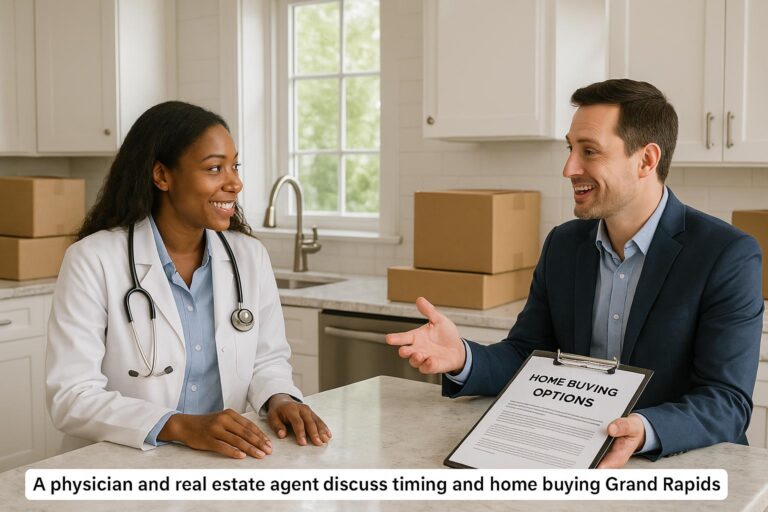
If you’re preparing to start your residency at Spectrum Health in Grand Rapids, you’re likely weighing whether to buy a home before your program begins. This decision isn’t just about the market—it’s about matching your housing choice with the realities of medical training, timing, and your future plans. Here’s what physicians, residents, and medical professionals should know before buying a home in Grand Rapids prior to starting residency.
Quick Answer
Buying a home in Grand Rapids before starting your Spectrum Health residency can make sense for some physicians, especially if you plan to stay in the area beyond training and have clarity on your budget, contract, and timeline. However, if you’re unsure about your long-term plans, want maximum flexibility, or are concerned about upfront costs, renting may be the safer short-term option.
1. Residency Timing, Contracts, and Move-In Logistics
The timing of your residency contract and actual move-in date is one of the most important factors. Most new residents receive their contracts and learn their start dates only a few months before the program begins. This tight window can make buying a home before residency challenging, especially if you’re relocating from out of state or need to coordinate with a partner’s job or schooling.
Buying a home typically requires 30–45 days from offer to closing, plus time for home searching, inspections, and possible repairs. If your contract or move-in date is still uncertain, it may be safer to rent for your first year. Once you know your schedule and are comfortable with Grand Rapids, you can revisit buying. On the other hand, if you have a signed contract and several months to plan, starting your home search early can give you more choices and a smoother transition.
2. Financial Considerations: Physician Loans and Upfront Costs
Physician loan programs are popular with residents and new doctors because they often allow low or no down payment, no PMI, and more flexible debt-to-income ratios. However, you still need to budget for closing costs (typically 2–4% of the purchase price), moving expenses, and the costs of setting up your new home. Many lenders require proof of your signed contract or a guaranteed start date before they’ll issue a mortgage approval.
If you plan to use a physician loan, speak with a local mortgage professional as soon as possible. Ask about qualification requirements, required documentation, and timing so there are no surprises late in the process. The Consumer Financial Protection Bureau offers helpful resources on understanding closing costs and loan estimates.
Financing note: Jason Pohlonski is not a lender. Physician loan programs, eligibility, interest rates, down payment options, loan limits, PMI requirements, and mortgage qualification standards vary by lender and borrower. Buyers should speak directly with a qualified mortgage professional before making financing decisions.
3. Neighborhoods, Commute, and Work-Life Balance
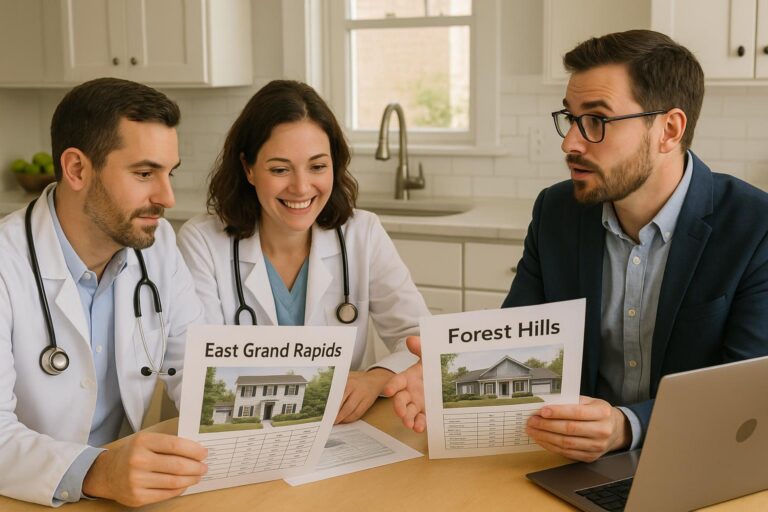
Grand Rapids offers a range of neighborhoods popular with physicians and medical residents. Proximity to the Medical Mile—where Spectrum Health, Corewell Health, and outpatient offices are clustered—can make a big difference in your daily commute, especially if you’re facing long shifts or frequent call. Many residents find East Grand Rapids, Forest Hills, Ada, Cascade, and walkable Grand Rapids neighborhoods appealing for their blend of convenience, amenities, and community feel.
When evaluating where to buy, consider how your commute will fit with your call schedule and whether you’ll need quick access to the hospital at odd hours. A 10–15 minute commute is common for many medical professionals working near downtown. If you anticipate moving up to a larger home or relocating after residency, think carefully about resale value and rental potential in your chosen neighborhood.
4. Flexibility, Exit Strategies, and Rule of Thumb
Before buying, ask yourself: “If my plans change, can I rent or sell this home without taking a loss?” A common rule of thumb is that you should plan to own the home for at least 3–5 years to offset the costs of buying and selling, even with physician-friendly loan options. If you’re unsure about staying in Grand Rapids after residency or may pursue a fellowship elsewhere, consider whether the property would be easy to rent or sell to another resident, fellow, or medical professional.
Some residents choose to buy a modest home or condo that fits their needs for the length of their training, with the intention of keeping it as a rental or selling when they move up after residency. Others wait until after completing training—when income, location, and family needs are clearer—to purchase their first Grand Rapids home. Both approaches work, but the right choice depends on your personal risk tolerance and future plans.
Local Grand Rapids Physician Real Estate Insight
From working with new residents and fellows, I’ve seen that commute time to Medical Mile is a major deciding factor—especially for those with demanding call schedules. Most buyers compare East Grand Rapids, Forest Hills, and neighborhoods near downtown for a balance of short commute and quality of life. Timing is often tight: some match into programs with less than 90 days before their start date, making it hard to close on a home before orientation. Many opt to rent first, then buy after their first year once they know their routine and favorite neighborhoods.
Realistic Physician Buyer or Seller Scenario
Recently, a new Spectrum Health resident relocating from out of state debated buying a $350,000 home in Forest Hills before starting residency. With only 60 days between her match and move, she was pre-approved for a physician loan but realized that scheduling showings, inspections, and a remote closing was stressful—especially with her partner’s job search ongoing. Ultimately, she chose to rent a condo for the first year, explore neighborhoods, and revisit buying once she had a better sense of her schedule and long-term plans. This approach offered flexibility and less risk, giving her time to learn the Grand Rapids real estate landscape before committing to a purchase.
Frequently Asked Questions About Physician Real Estate in Grand Rapids
- Can I buy a home in Grand Rapids before my residency contract is finalized?
Most lenders require a signed employment contract with a start date before approving a physician loan, so it’s best to wait until your contract is official. - What neighborhoods are popular with Spectrum Health residents?
East Grand Rapids, Forest Hills, Ada, Cascade, and downtown Grand Rapids neighborhoods are top choices for their commutes and amenities. - Is it common for residents to buy before moving to Grand Rapids?
Some do, but many rent for the first year to get to know the area, then buy once they’re settled and confident about their long-term plans. - How long should I plan to own a home to make buying worthwhile?
A good rule of thumb is at least 3–5 years; otherwise, selling costs may outweigh potential benefits, especially if you relocate after residency.
Related Physician Real Estate Resources
- Grand Rapids Physician Real Estate Help
- Should Medical Residents Rent or Buy in Grand Rapids?
- Buying After Residency: Moving From a Condo to Your First Physician Home in Grand Rapids
About the Author
Jason Pohlonski
is a Michigan licensed real estate salesperson with Keller Williams Grand Rapids East. He helps buyers and sellers throughout Grand Rapids, East Grand Rapids, Forest Hills, Ada, Byron Center, Jenison, Cascade, and surrounding West Michigan communities.
Jason began his real estate career in Chicago in 2004, later expanding his experience in Ann Arbor from 2014 to 2019, and has been serving clients in the Grand Rapids area since 2019.
With over 20 years of combined real estate experience across multiple markets, Jason focuses on helping clients make clear real estate decisions involving pricing, offer terms, inspections, appraisals, relocation timing, and buy-sell planning.
Jason has worked with physician and medical professional buyers in different stages of the process, including relocation buyers, residents and fellows staying in Grand Rapids after training, move-up buyers purchasing after a new attending role, and clients selling a condo or first home before buying the next property.
Industry Recognition
Jason is recognized by platforms and industry organizations including Zillow, Grand Rapids Magazine Real Estate All-Stars, and Real Producers for his work serving West Michigan buyers and sellers.
Jason also supports One More Moment, a nonprofit that grants wishes to late-stage cancer patients, by donating $100 for every successful closing.
Professional Disclosure
Jason Pohlonski
Michigan Licensed Real Estate Salesperson
License Verification: Verify Michigan License #6501386166
Brokerage: Keller Williams Grand Rapids East
Brokerage Office: 630 Kenmoor Ave SE, Suite 101, Grand Rapids, MI 49546
📱 Call or text: 616-916-9770
📅 Schedule consultation:
https://calendly.com/pohlonskirealestate/30min
📧 Email: jpohlonski@kw.com
This article reflects real client experiences and market conditions in Grand Rapids and surrounding communities at the time of publication. Real estate outcomes can vary depending on market conditions, property characteristics, buyer demand, financing terms, inspection results, appraisal results, and lender requirements.
This article is for general informational purposes only and is not mortgage, legal, tax, or financial advice. Jason Pohlonski is not a lender. Physician loan programs, eligibility, interest rates, down payment options, loan limits, PMI requirements, and mortgage qualification standards vary by lender and borrower. Buyers should speak directly with a qualified mortgage professional before making financing decisions.