Should Grand Rapids Buyers Worry About Radon Risks?
When buying a home in Grand Rapids, radon is a real and common concern. West Michigan’s geology means radon can be present in many homes—even those that look perfectly updated or well-maintained. The key strategy for buyers: plan for radon testing during your inspection period, and understand what it means for your purchase decision.
Quick Answer
Yes, radon should be on your radar as a Grand Rapids home buyer. Many local homes test above the EPA’s recommended action level for radon, but the good news is that radon can be effectively mitigated with a standard system.
The best approach is to include a radon test with your home inspection. If results are high, you can negotiate for a mitigation system before closing. If you’re dealing with this situation, I’m happy to walk through it with you.
Understanding Radon in Grand Rapids Homes
Radon is a colorless, odorless radioactive gas that comes from natural uranium in the soil. In Kent County, including Grand Rapids, the EPA classifies our area as “Zone 1”—the highest potential for elevated indoor radon (EPA source). This means it’s common for homes, old and new, to have radon levels above the recommended limit of 4.0 pCi/L.
In my experience, about one in three Grand Rapids homes I help buyers purchase will test above this threshold. It’s not about the home’s age or condition—it’s about the soil and foundation. That’s why radon testing is a routine part of most local inspection packages.
Jason’s take: I advise every buyer—whether you’re looking in East Grand Rapids, Forest Hills, or downtown—to budget for a radon test. It’s a simple, low-cost safeguard that gives you real negotiating leverage if the results are high.
How Radon Testing Works During Your Purchase
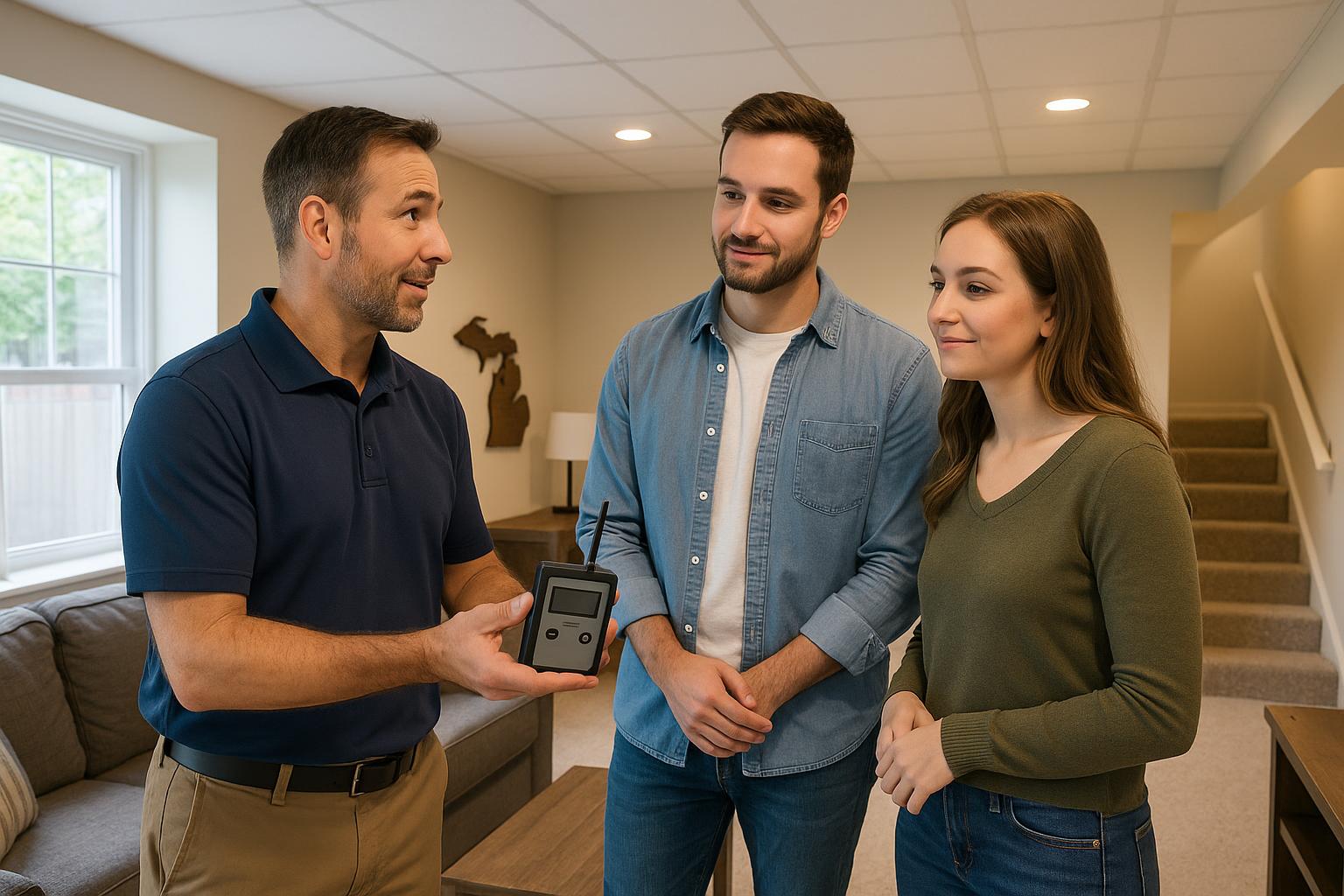
Radon testing is usually performed during your home inspection period, which is typically the first 7–10 days after your offer is accepted. A professional inspector places a small, tamper-proof testing device in the home’s lowest livable area (often the basement or crawlspace). The device stays in place for 48–96 hours to measure average radon levels.
You’ll receive a written report showing the average radon reading. If the level is at or above 4.0 pCi/L, you have grounds to request a mitigation system or a seller credit. Most buyers in Grand Rapids make this request part of their inspection negotiations. Learn more about radon testing and health impacts from the CDC.
Jason’s take: I’ve seen sellers respond quickly to radon findings because it’s so common here. Don’t be afraid to ask for mitigation—it’s a standard part of the process, not a deal-breaker.
What Happens If Radon Levels Are High?
If your radon test shows elevated levels, you can negotiate with the seller for installation of a mitigation system before closing. A typical mitigation system in Grand Rapids costs $800–$1,500. These systems vent radon safely outside, reducing indoor levels to well below the EPA guideline.
In most transactions, buyers ask for the system to be installed by a licensed contractor, and the work is verified before closing. Some buyers prefer a seller credit to arrange installation after closing. Either way, this is a routine negotiation in our local market, and most sellers are prepared to address it.
Decision framework: If your radon reading is at or above 4.0 pCi/L, ask for mitigation. If it’s just below, consider your risk tolerance and whether you plan to finish or spend time in the basement. Above 4.0? Always negotiate for a fix.
How Radon Impacts Your Offer and Negotiations
Including a radon contingency in your offer is normal practice in Grand Rapids. This means your offer is subject to satisfactory radon results—giving you flexibility if the reading comes back high. In multiple-offer situations, some buyers will shorten their inspection window or waive minor repairs, but most still keep the radon test.
If you’re competing against other buyers, it’s rare for agents to recommend skipping radon testing. Instead, you might agree to a “pass/fail” inspection or limit your repair requests to major health and safety items—radon typically qualifies. For more on handling inspections in a fast-moving market, see what to expect when buyers tour Forest Hills homes.
Jason’s take: Even in hot neighborhoods like Alger Heights or Eastown, buyers are still asking for radon mitigation if the results call for it. Sellers expect this and rarely push back.
Real Buyer Case Study
Last summer, I worked with first-time buyers purchasing a $310,000 home in the Creston neighborhood. During inspection, the radon test came back at 5.7 pCi/L. We requested the seller install a mitigation system by a certified contractor. The seller agreed and completed the work before closing, providing documentation and a follow-up test that showed safe levels. The buyers moved in with peace of mind—and no extra out-of-pocket cost.
Grand Rapids Buyer Market Insight
In the Grand Rapids area, I’ve noticed that buyers in the $250K–$400K range are especially likely to ask for radon mitigation, even when competing with multiple offers. This is because buyers at this price point expect homes to be move-in ready and don’t want to take on future health or resale risks. Sellers know this and typically address radon findings without much negotiation.
Frequently Asked Questions About Buying in Grand Rapids
- Is radon testing required in Grand Rapids?
No, but it’s highly recommended and included in most local inspection packages. - How long does radon mitigation take?
A professional system can usually be installed in one day, with immediate results. - Will a radon issue affect my mortgage approval?
Not directly, but some government-backed loans (like FHA) may require mitigation if high levels are found. - Should I test for radon in new construction?
Yes—radon can affect new and old homes alike, regardless of age or foundation type.
Related Grand Rapids Buyer Resources
- Key Title Work Steps for Grand Rapids Home Buyers
- What Happens After I Accept an Offer on My Grand Rapids Home?
- What Should I Do If My Grand Rapids Home Isn’t Getting Offers?
About the Author
Jason Pohlonski
is a Michigan licensed real estate salesperson with Keller Williams Grand Rapids East. He helps buyers and sellers throughout Grand Rapids, East Grand Rapids, Forest Hills, Ada, Byron Center, Jenison, Cascade, and surrounding West Michigan communities.
Jason began his real estate career in Chicago in 2004, later expanding his experience in Ann Arbor from 2014 to 2019, and has been serving clients in the Grand Rapids area since 2019.
With over 20 years of combined real estate experience across multiple markets, Jason focuses on helping clients make clear real estate decisions involving pricing, offer terms, inspections, appraisals, relocation timing, and buy-sell planning.
Industry Recognition
Jason is recognized by platforms and industry organizations including Zillow, Grand Rapids Magazine Real Estate All-Stars, and Real Producers for his work serving West Michigan buyers and sellers.
Jason also supports One More Moment, a nonprofit that grants wishes to late-stage cancer patients, by donating $100 for every successful closing.
Professional Disclosure
Jason Pohlonski
Michigan Licensed Real Estate Salesperson
License Verification: Verify Michigan License #6501386166
Brokerage: Keller Williams Grand Rapids East
Brokerage Office: 1555 Arboretum Dr. SE, Grand Rapids, MI 49546
📱 Call or text: 616-916-9770
📅 Schedule consultation:
https://calendly.com/pohlonskirealestate/30min
📧 Email: jpohlonski@kw.com
This article reflects real client experiences and market conditions in Grand Rapids and surrounding communities at the time of publication. Real estate outcomes can vary depending on market conditions, property characteristics, buyer demand, financing terms, inspection results, appraisal results, and lender requirements.
This article is for general informational purposes only and is not legal, tax, financial, insurance, engineering, inspection, or floodplain determination advice. Buyers and sellers should consult qualified professionals before making decisions involving financing, insurance, inspections, taxes, legal issues, or property risk.