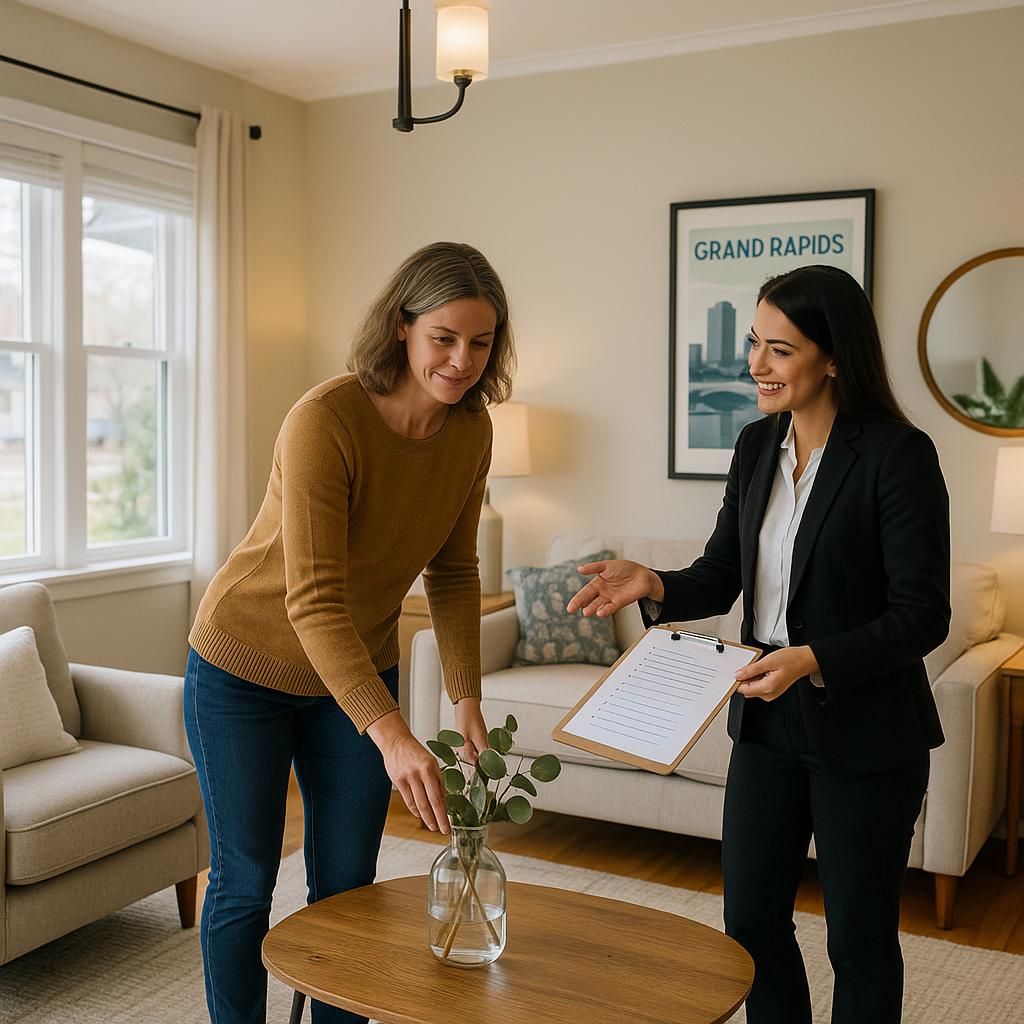
How can I make my Grand Rapids home stand out to buyers during showings?
When your Grand Rapids home is on the market, you want it to stand out during showings. The reality is, even in a strong market, not every listing gets the attention it deserves right away. If your home isn’t getting much activity or feedback is lukewarm, it can be frustrating—and it directly impacts your sale timeline and bottom line.
Making your home memorable during showings is more than just cleaning up. It’s about positioning your property so that the market responds quickly, and you get stronger offers, better terms, and a smoother path to closing.
Quick Answer
To make your Grand Rapids home stand out during showings, focus on three core areas: visual presentation, property condition, strategic pricing, and coordinated showing logistics. Start with staging and small improvements that have a big impact—think clean windows, neutral paint, and decluttered spaces. Then, work with your agent to make sure your listing is priced and positioned to attract the right attention from the start.
Strong first impressions drive better results and keep your listing from going stale. If you’re dealing with this, I’m happy to walk through it with you.
1. Prioritize Visual Presentation and Staging
If your listing isn’t generating activity, the first place to look is how your home shows in person and online. Staging doesn’t have to mean a full furniture rental—sometimes, simple edits like rearranging furniture, adding fresh flowers, or updating lighting can make a huge difference. In Grand Rapids, homes with neutral tones, bright lighting, and clean lines tend to photograph and show best.
Jason’s take: I’ve seen sellers invest less than $500 in paint, light fixtures, and a pro cleaning, and it transformed their showing response. Even if your home is occupied, a quick declutter and some thoughtful accents go a long way. Consider professional photography as well—according to the National Association of Realtors, homes with strong online presentation see more showings.
2. Address Maintenance and Minor Repairs
Little things add up. A sticky door, a loose handrail, or a burnt-out bulb can make a home feel neglected—even if it’s otherwise in great shape. When the market isn’t responding to your listing, it’s time to look at the details. Walk through your home as if you’re seeing it for the first time, or ask your agent to do a “pre-showing” walkthrough and spot issues you may have missed.
Jason’s take: In Grand Rapids, I’ve seen minor repairs directly impact feedback and offer strength. If a home feels well-maintained, it communicates value and reduces the risk of inspection issues later. Even small investments in repairs can prevent your listing from being overlooked.
3. Set a Competitive, Strategic Price
Pricing is a powerful lever for getting the market’s attention. If your home isn’t standing out, review the latest comparable sales and new listings. Sometimes, a small price adjustment—just enough to move your home into a more active search bracket—can create a surge in showings and offers. Remember, the longer a home sits, the more leverage shifts away from the seller.
Work with your agent to analyze feedback and showing data. Are you getting showings but no offers? Or is there no activity at all? Each scenario calls for a different response. For more on pricing strategy, the Consumer Financial Protection Bureau offers useful guidance on comparing home sale outcomes.
4. Maximize Showing Availability and Flexibility
If showings are limited or inconvenient, you’re missing out on potential offers. In Grand Rapids, many sellers see more activity by allowing short-notice showings, providing a lockbox, and being flexible with timing—evenings and weekends are prime. If you’re still living in the home, it can be inconvenient, but the payoff is worth it: more showings mean more chances for the right offer.
Consider coordinating with your agent to batch showings or hold an open house if private appointments are slow. If your listing is occupied, clear communication and a set routine (like a weekly deep clean or a “showing ready” checklist) can keep you prepared with minimal stress.
Real Seller Case Study: Standing Out in Grand Rapids
One Grand Rapids seller I worked with had their home on the market for three weeks with only a handful of showings and no serious interest. After reviewing the feedback, we focused on a few high-impact changes: they invested in professional cleaning, painted the main living areas a light neutral, swapped out dated light fixtures, and allowed for more flexible showing times. Within ten days, showing requests doubled and the seller received two strong offers—one of which included above-asking terms and waived inspection contingencies. The seller credited the turnaround to making their home feel move-in ready and easy to access.
Grand Rapids Market Insight
In the Grand Rapids market, I consistently see that homes which are clean, well-lit, and staged—paired with realistic pricing—move faster and attract stronger offers. Sellers who invest in presentation and flexibility tend to outperform those who wait for “the right buyer” to come along.
Frequently Asked Questions About Selling in Grand Rapids
- How do I know if my listing needs a price adjustment?
If your home has been on the market for two weeks with few or no showings, or if you’re getting showings but no offers, it’s time to review comparable sales and recent activity with your agent. - Is professional staging worth it in Grand Rapids?
While full staging isn’t always required, even light staging and decluttering can significantly improve your listing’s performance and shorten time on market. - What small upgrades give the best return before showings?
Fresh paint, updated lighting, and deep cleaning are the most cost-effective ways to make your home stand out. Curb appeal—like mulched beds and a tidy entry—also matters. - How can I manage showings while still living in my home?
Set a routine for keeping your home “show ready,” use storage bins to quickly tidy up, and coordinate with your agent for advance notice whenever possible.
Related Resources
- Should I Fix Things Before Selling in Grand Rapids?
- When Should I List My Grand Rapids Home?
- Can I Sell My Grand Rapids Home As-Is?
About the Author
Jason Pohlonski
is a Michigan licensed real estate salesperson with Keller Williams Grand Rapids East. He helps buyers and sellers throughout Grand Rapids, East Grand Rapids, Forest Hills, Ada, Byron Center, Jenison, Cascade, and surrounding West Michigan communities.
Jason began his real estate career in Chicago in 2004, later expanding his experience in Ann Arbor from 2014 to 2019, and has been serving clients in the Grand Rapids area since 2019.
With over 20 years of combined real estate experience across multiple markets, Jason focuses on helping clients make clear real estate decisions involving pricing, offer terms, inspections, appraisals, relocation timing, and buy-sell planning.
Industry Recognition
Jason is recognized by platforms and industry organizations including Zillow, Grand Rapids Magazine Real Estate All-Stars, and Real Producers for his work serving West Michigan buyers and sellers.
Jason also supports One More Moment, a nonprofit that grants wishes to late-stage cancer patients, by donating $100 for every successful closing.
Professional Disclosure
Jason Pohlonski
Michigan Licensed Real Estate Salesperson
License Verification: Verify Michigan License #6501386166
Brokerage: Keller Williams Grand Rapids East
Brokerage Office: 1555 Arboretum Dr. SE, Grand Rapids, MI 49546
📱 Call or text: 616-916-9770
📅 Schedule consultation:
https://calendly.com/pohlonskirealestate/30min
📧 Email: jpohlonski@kw.com
This article reflects real client experiences and market conditions in Grand Rapids and surrounding communities at the time of publication. Real estate outcomes can vary depending on market conditions, property characteristics, buyer demand, financing terms, inspection results, appraisal results, and lender requirements.
This article is for general informational purposes only and is not legal, tax, financial, insurance, engineering, inspection, or floodplain determination advice. Buyers and sellers should consult qualified professionals before making decisions involving financing, insurance, inspections, taxes, legal issues, or property risk.