What Should I Know About Foundation Issues in Grand Rapids?
If you’re thinking about buying a home in Grand Rapids, foundation issues are something you’ll want to understand before making an offer. Foundation problems can impact everything from your financing and insurance options to your negotiation leverage, and they show up more often than many buyers expect—especially in older West Michigan homes.
Quick Answer
Foundation issues in Grand Rapids homes can include cracks, bowing walls, water intrusion, or settling, and they’re most commonly found in older properties or homes with poor drainage. These problems can range from minor cosmetic cracks to major structural risks, so it’s important to have a qualified home inspector check the foundation before you commit.
If a foundation problem is discovered, it doesn’t always mean you have to walk away—but you’ll need to understand the repair scope, potential costs, and how it might affect your financing, insurance, and negotiation strategy. If you’re dealing with this situation, I’m happy to walk through it with you.
1. Understanding Common Foundation Issues in Grand Rapids Homes
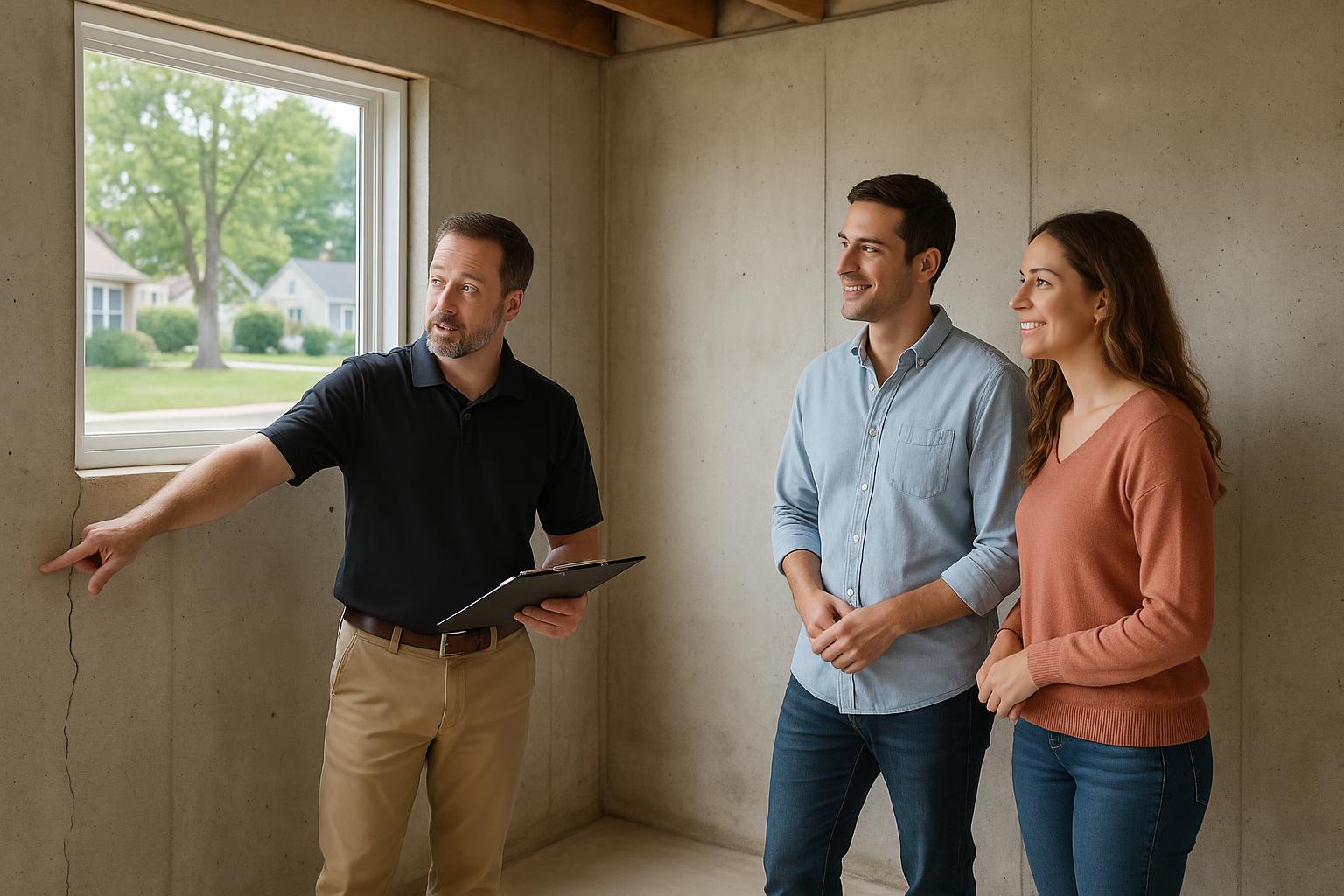
In the Grand Rapids area, foundation issues often stem from our freeze-thaw cycles, clay soil, and the age of many local homes. You might see hairline cracks, horizontal cracks, bowing basement walls, or signs of water intrusion—especially in neighborhoods with older housing stock or poor exterior grading. Some cracks are normal and simply cosmetic, but others can signal serious structural movement or moisture problems.
Buyers should know that poured concrete foundations (common in post-1960 homes) usually perform better than old stone or block foundations, but any type can have issues if drainage is poor. If you see cracks wider than 1/4 inch, walls that bow or tilt, or evidence of long-term water entry, you’ll want a professional opinion. The Consumer Financial Protection Bureau recommends always getting a thorough inspection, and in Grand Rapids, a specialized foundation contractor may be needed for further evaluation.
2. How Foundation Issues Affect Financing and Insurance
Most lenders in Grand Rapids will require that major structural or safety issues—like significant foundation movement or water intrusion—be addressed before closing. FHA, VA, and conventional mortgages all have property condition standards, and foundation defects can put your financing at risk if they’re considered “health or safety” concerns. If the foundation issue is flagged on an appraisal or inspection, the lender may require repairs, additional inspections, or even deny the loan until the problem is fixed (HUD guidelines for 203(k) loans cover this in detail).
Insurance companies also care about foundation health. Some may limit coverage or exclude foundation-related claims if issues are known before policy inception. Jason’s take: I’ve seen buyers in Grand Rapids lose out on great homes because they couldn’t get financing after a foundation problem was uncovered—so it’s smart to get ahead of these concerns early in your due diligence.
3. Negotiation Strategies When a Foundation Issue Is Found
If your inspection uncovers a foundation concern, you have several options. You can ask the seller to repair it before closing, request a price reduction or closing credit, or—if it’s a dealbreaker—walk away using your inspection contingency. In Grand Rapids, it’s common for buyers to negotiate for professional repairs rather than DIY fixes, especially for more significant issues like wall bracing or crack injection.
Rule of thumb: If the estimated repair exceeds $2,500–$5,000 or requires permits, get a written bid from a reputable local contractor before negotiating. This gives you leverage and helps avoid surprises at closing. Jason’s take: Sellers in Grand Rapids will sometimes agree to repairs to keep the deal together, but you need documentation and receipts, not just promises. Don’t skip the reinspection before closing!
4. Deciding When a Foundation Issue Is a Dealbreaker
Not every foundation issue is a reason to walk away, but buyers need to weigh the cost, risk, and future resale impact. Minor, stable cracks or water stains can often be managed with drainage improvements and monitoring. Major movement, active water leaks, or foundation walls bowing more than 1 inch out of plumb, however, are red flags that can scare off future buyers, limit financing, and be very expensive to fix.
Here’s a decision-making framework: Ask yourself (1) Can I get financing and insurance with this issue? (2) Can I afford the repair or negotiate for it? (3) Will this affect resale value in my preferred neighborhood? (4) Am I comfortable with the risk? For many Grand Rapids buyers, a professional opinion and repair estimate make the decision much clearer.
Real Buyer Case Study
Last year, I worked with buyers looking at a $325K home in Eastown. Their inspection revealed horizontal cracks and slight bowing in a block foundation wall. We brought in a structural contractor who quoted $6,000 for wall anchors and waterproofing. We negotiated a seller credit to cover the repair, and the lender signed off with proof of work scheduled before closing. The buyers got the home they wanted, and the new anchors actually made the property more appealing for resale down the road.
Grand Rapids Buyer Market Insight
In the $250K–$400K range, it’s not unusual for buyers to compete with multiple offers—sometimes even on homes with known foundation repairs. In a hot Grand Rapids neighborhood, I’ve seen buyers waive minor cosmetic concerns, but major foundation risks can quickly reduce buyer competition or force sellers to lower their price. If you’re buying in a competitive area, be ready to decide quickly—but don’t skip the inspection. I always recommend a licensed home inspector and, if needed, a second opinion from a foundation specialist.
Frequently Asked Questions About Buying in Grand Rapids
Are foundation issues common in Grand Rapids homes?
Older Grand Rapids homes and those with poor drainage are more likely to have some foundation cracks or water concerns, but major structural problems are less common. Always get an inspection.
Can I still get a mortgage if there’s a foundation problem?
It depends on the severity. Most lenders require that structural or water issues be professionally repaired before closing. FHA and VA loans have strict standards.
How much do foundation repairs typically cost?
Minor crack repairs can be $500–$2,000, but wall bracing or waterproofing can run $5,000–$20,000 or more. Always get local bids before negotiating.
Should I walk away from a home with foundation issues?
Not always—many issues are fixable, and you can negotiate repairs or credits. The key is understanding the cost, risk, and how it affects your financing and future resale.
Related Grand Rapids Buyer Resources
- How Do I Choose the Right Homeowners Insurance for My First Home in Grand Rapids?
- How Can I Prepare My Grand Rapids Home for Sale If I’m Planning to Downsize?
- How Do I Handle the Risk of a Stale Listing When Selling My Grand Rapids Home?
About the Author
Jason Pohlonski
is a Michigan licensed real estate salesperson with Keller Williams Grand Rapids East. He helps buyers and sellers throughout Grand Rapids, East Grand Rapids, Forest Hills, Ada, Byron Center, Jenison, Cascade, and surrounding West Michigan communities.
Jason began his real estate career in Chicago in 2004, later expanding his experience in Ann Arbor from 2014 to 2019, and has been serving clients in the Grand Rapids area since 2019.
With over 20 years of combined real estate experience across multiple markets, Jason focuses on helping clients make clear real estate decisions involving pricing, offer terms, inspections, appraisals, relocation timing, and buy-sell planning.
Industry Recognition
Jason is recognized by platforms and industry organizations including Zillow, Grand Rapids Magazine Real Estate All-Stars, and Real Producers for his work serving West Michigan buyers and sellers.
Jason also supports One More Moment, a nonprofit that grants wishes to late-stage cancer patients, by donating $100 for every successful closing.
Professional Disclosure
Jason Pohlonski
Michigan Licensed Real Estate Salesperson
License Verification: Verify Michigan License #6501386166
Brokerage: Keller Williams Grand Rapids East
Brokerage Office: 1555 Arboretum Dr. SE, Grand Rapids, MI 49546
📱 Call or text: 616-916-9770
📅 Schedule consultation:
https://calendly.com/pohlonskirealestate/30min
📧 Email: jpohlonski@kw.com
This article reflects real client experiences and market conditions in Grand Rapids and surrounding communities at the time of publication. Real estate outcomes can vary depending on market conditions, property characteristics, buyer demand, financing terms, inspection results, appraisal results, and lender requirements.
This article is for general informational purposes only and is not legal, tax, financial, insurance, engineering, inspection, or floodplain determination advice. Buyers and sellers should consult qualified professionals before making decisions involving financing, insurance, inspections, taxes, legal issues, or property risk.