What should I know about buying a Grand Rapids home with an old furnace?
If you’re considering buying a Grand Rapids home with an older furnace, you’re not alone—this is one of the most common concerns I see, especially in our classic neighborhoods. An old furnace doesn’t have to be a dealbreaker, but it does mean you’ll want to be strategic about inspections, negotiations, and your long-term budget. Let’s break down what you really need to know before moving forward.
Quick Answer
An old furnace in a Grand Rapids home often signals higher future costs, more immediate inspection scrutiny, and possible negotiation leverage. It’s important to understand the furnace’s age, condition, and expected lifespan because it can affect your comfort, energy bills, and even your lender’s requirements.
While you might not need to walk away, you should factor in replacement costs, request a thorough inspection, and consider negotiating repairs or credits. If you’re dealing with this situation, I’m happy to walk through it with you.
1. Assessing Furnace Age and Expected Lifespan
The first thing to check is how old the furnace actually is. In Grand Rapids, many homes built before 2000 still have their original furnace, and some equipment can be well over 20 years old. Most forced-air gas furnaces last about 15–25 years with good maintenance, according to the U.S. Department of Energy. If you’re looking at a home with a furnace approaching (or past) that age, you should plan for replacement in the next few years—sometimes sooner if it hasn’t been well maintained.
Jason’s take: In my experience, once a furnace is 18–20 years old, most buyers and their inspectors in Grand Rapids expect it will need replacing soon. Don’t assume a “working” furnace means it’s a non-issue—factor the age into your offer and future budget.
2. Inspection and Safety Concerns
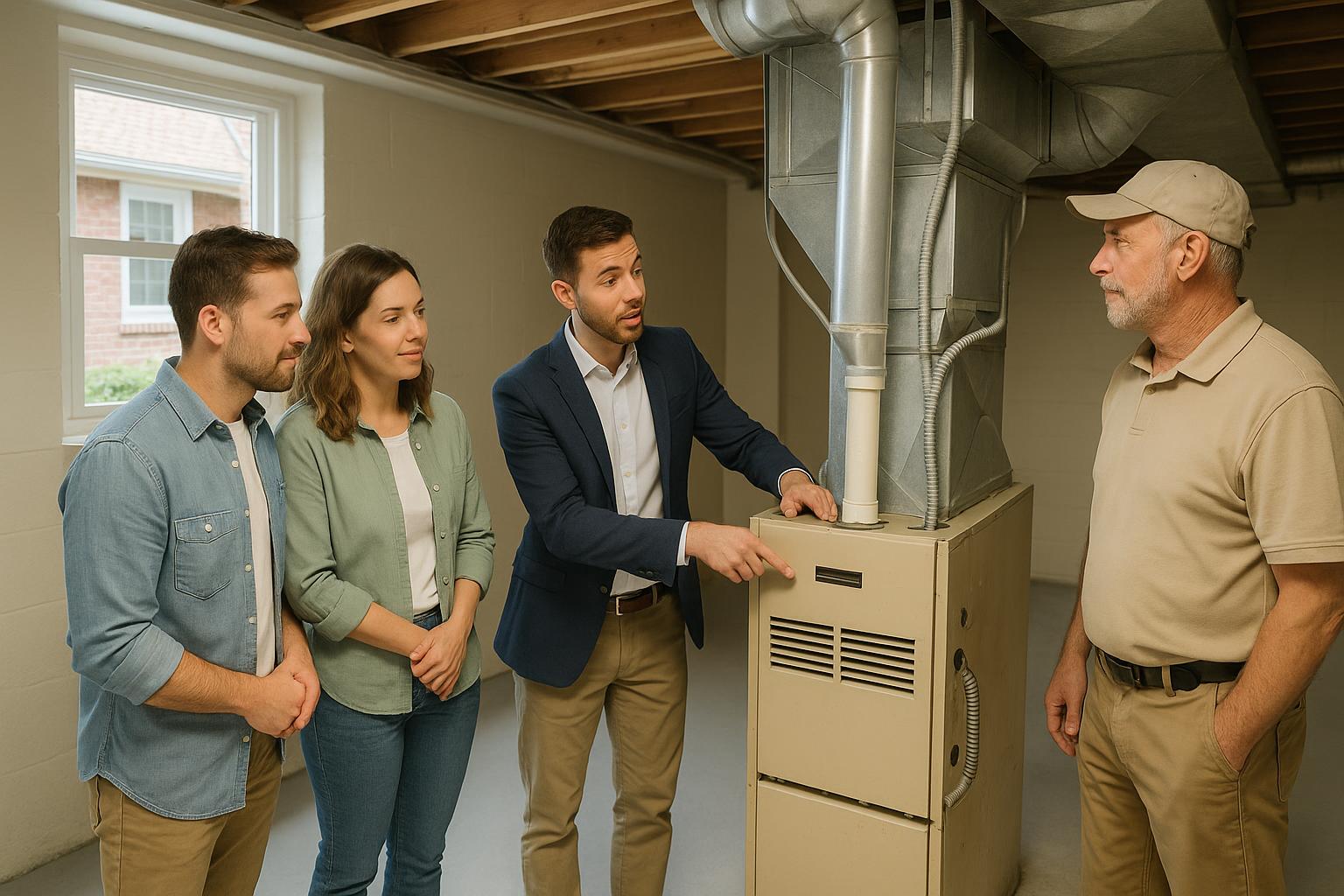
During your home inspection, the HVAC system will get special attention. In Grand Rapids, inspectors routinely check for cracked heat exchangers, improper venting, carbon monoxide risks, and overall functionality. If the system can’t be fully tested (for example, if it’s summer and the heat can’t be run), you may need a separate HVAC evaluation.
Be aware that some older furnaces may not meet current safety codes, even if they’re still operating. If a significant safety issue is found, lenders (especially FHA, VA, or RD loans) may require repair or replacement before closing. You can read more about lender safety requirements from the U.S. Department of Housing and Urban Development.
3. Negotiation Strategies and Buyer Leverage
Knowing the furnace is old gives you potential leverage during negotiations. In Grand Rapids, it’s common for buyers to request a repair, a credit, or a price reduction based on the expected replacement cost—which can run $3,500–$7,000 for a standard system. Sellers sometimes offer a home warranty, but read the fine print—most warranties don’t cover full replacement of systems with “normal wear and tear.”
Rule of thumb: If the furnace is over 20 years old and near the end of its typical lifespan, I recommend asking for either a seller-paid replacement, a closing cost credit, or a price reduction. If you’re in a multiple-offer scenario, you may need to weigh whether it’s worth pushing or simply factoring the replacement into your own budget.
Jason’s take: In competitive Grand Rapids neighborhoods like Alger Heights or Eastown, buyers sometimes let minor HVAC issues slide to win the deal, but I always advise clients to get a real estimate so they know what they’re taking on.
4. Long-Term Costs and Energy Efficiency
An older furnace is almost always less efficient than modern models. This means higher heating bills, especially during West Michigan winters. Upgrading to a high-efficiency furnace could save you $200–$500 per year in energy costs, according to DOE estimates. Some local utilities, like Consumers Energy, offer rebates for upgrading outdated systems, which can help offset the cost.
Before making your offer, get a realistic quote for furnace replacement, and check for available rebates or energy efficiency programs. It’s smart to budget for this upgrade within your first few years of ownership if the furnace is already nearing the end of its lifespan.
Real Buyer Case Study
Last year, I worked with buyers purchasing a $340,000 home in the Creston neighborhood. The furnace was 23 years old—original to the house—and the inspection flagged it as “serviceable, but near end of useful life.” We negotiated a $4,000 seller credit at closing, which covered most of the cost for a new high-efficiency furnace the buyers installed after moving in. This approach helped the buyers avoid a bidding war over the issue and set them up for lower heating bills their first winter.
Grand Rapids Buyer Market Insight
In Grand Rapids, older homes—especially in Heritage Hill, Alger Heights, and Eastown—often come with aging mechanicals. In a hot market, some buyers will accept an old furnace “as is” to strengthen their offer, but most still expect either a price adjustment or a clear plan for replacement. I’ve noticed buyers are more willing to overlook an old furnace if the rest of the home is updated or move-in ready, but less so if there are multiple big-ticket items needing attention.
Frequently Asked Questions About Buying in Grand Rapids
Can I get a mortgage on a Grand Rapids home with an old furnace?
Yes, most lenders allow it as long as the furnace is functional and doesn’t pose a safety risk. Government-backed loans (FHA, VA, RD) may require repairs if there are safety or code issues flagged by the appraiser or inspector.
Should I ask the seller to replace the furnace before closing?
It’s reasonable to ask, especially if the furnace is at or past its expected lifespan. If the market is competitive, consider asking for a credit or price reduction instead—sometimes sellers prefer this to managing the replacement themselves.
Will a home warranty cover an old furnace in Grand Rapids?
Most basic home warranties cover repairs, not full replacement, and may deny claims for pre-existing wear and tear. Always read the warranty details and get a separate quote for actual replacement costs before relying on a warranty.
How much does it cost to replace a furnace in Grand Rapids?
Expect to pay $3,500–$7,000 for a standard gas furnace replacement. High-efficiency models, zoning, or ductwork repairs can increase the cost. Always get a local quote before finalizing your budget.
Related Grand Rapids Buyer Resources
- How Do I Handle Showings for My Grand Rapids Home If I Have a Busy Schedule?
- How Do I Decide Between a Condo or House in Grand Rapids?
- Buying a Home in East Grand Rapids After Residency
About the Author
Jason Pohlonski
is a Michigan licensed real estate salesperson with Keller Williams Grand Rapids East. He helps buyers and sellers throughout Grand Rapids, East Grand Rapids, Forest Hills, Ada, Byron Center, Jenison, Cascade, and surrounding West Michigan communities.
Jason began his real estate career in Chicago in 2004, later expanding his experience in Ann Arbor from 2014 to 2019, and has been serving clients in the Grand Rapids area since 2019.
With over 20 years of combined real estate experience across multiple markets, Jason focuses on helping clients make clear real estate decisions involving pricing, offer terms, inspections, appraisals, relocation timing, and buy-sell planning.
Industry Recognition
Jason is recognized by platforms and industry organizations including Zillow, Grand Rapids Magazine Real Estate All-Stars, and Real Producers for his work serving West Michigan buyers and sellers.
Jason also supports One More Moment, a nonprofit that grants wishes to late-stage cancer patients, by donating $100 for every successful closing.
Professional Disclosure
Jason Pohlonski
Michigan Licensed Real Estate Salesperson
License Verification: Verify Michigan License #6501386166
Brokerage: Keller Williams Grand Rapids East
Brokerage Office: 1555 Arboretum Dr. SE, Grand Rapids, MI 49546
📱 Call or text: 616-916-9770
📅 Schedule consultation:
https://calendly.com/pohlonskirealestate/30min
📧 Email: jpohlonski@kw.com
This article reflects real client experiences and market conditions in Grand Rapids and surrounding communities at the time of publication. Real estate outcomes can vary depending on market conditions, property characteristics, buyer demand, financing terms, inspection results, appraisal results, and lender requirements.
This article is for general informational purposes only and is not legal, tax, financial, insurance, engineering, inspection, or floodplain determination advice. Buyers and sellers should consult qualified professionals before making decisions involving financing, insurance, inspections, taxes, legal issues, or property risk.