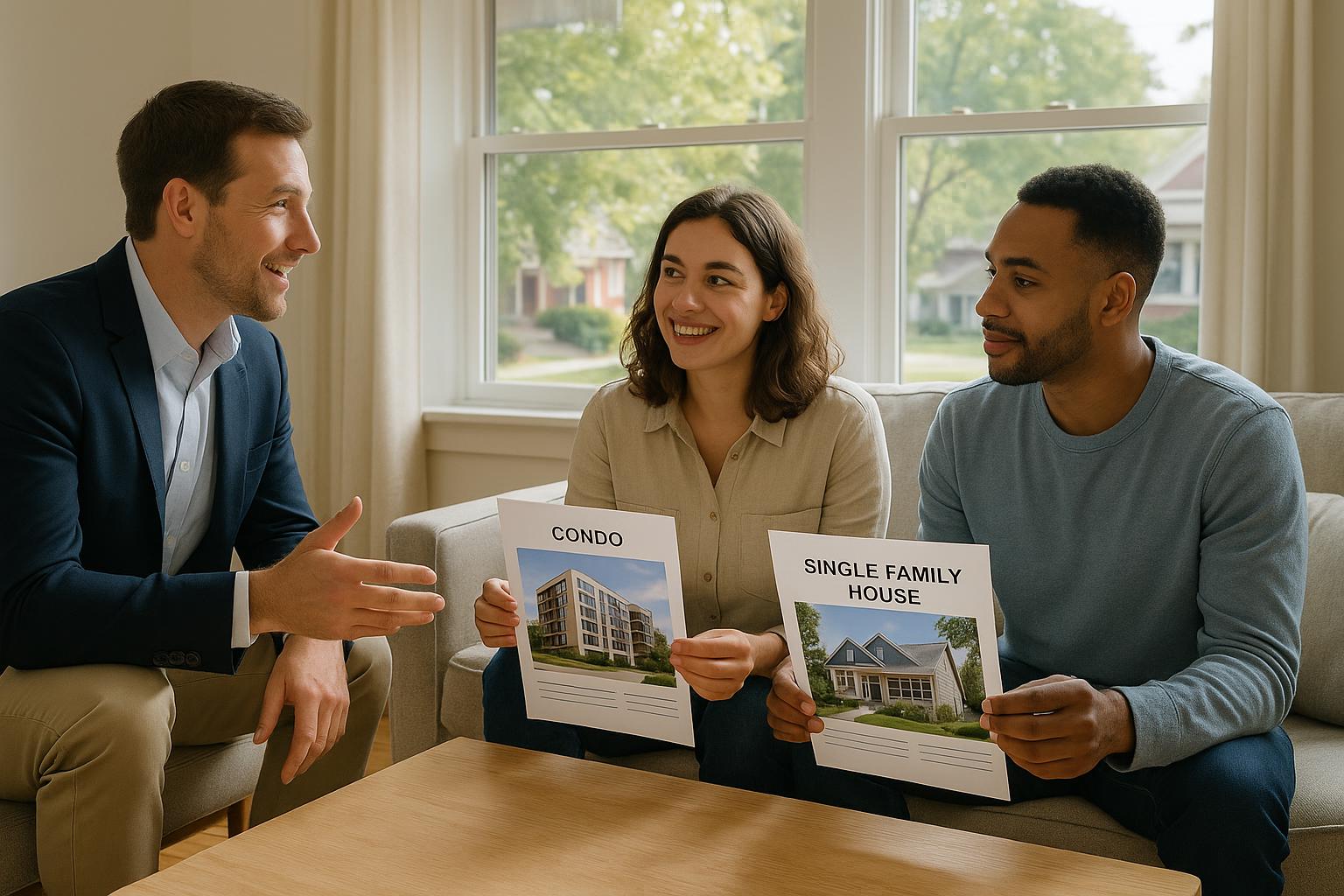
How Do I Decide Between a Condo or House in Grand Rapids?
Choosing between making an offer on a condo or a house in Grand Rapids usually comes down to a few critical factors: your lifestyle needs, budget, long-term goals, and how comfortable you are with things like maintenance and association rules. In the Grand Rapids area, both options are popular, but the right choice depends on how you want to live and what you want to avoid.
Quick Answer
If you want less maintenance, are comfortable with association rules, and like the idea of amenities, a Grand Rapids condo can be a great fit—especially if you’re in a lower price range or want to live closer to downtown. If you want more control, privacy, and yard space—and are up for handling maintenance—a single-family house is often the better choice, especially for growing families or those who value independence.
Think about your budget, future plans, and tolerance for HOA fees or restrictions before making an offer. If you’re dealing with this situation, I’m happy to walk through it with you.
1. Comparing Costs: Monthly Payments and Hidden Expenses
The first thing most Grand Rapids buyers notice is that condos often have a lower sticker price than single-family homes in similar neighborhoods. However, you’ll need to factor in monthly HOA fees, which in the Grand Rapids area typically range from $150–$350/month, though some luxury downtown condos are much higher. These fees usually cover exterior maintenance, lawn care, snow removal, water, and sometimes even insurance for the building structure.
With a house, you’re responsible for all upkeep, but you avoid HOA dues. That said, you’ll want to budget for lawn service, roof repairs, and exterior maintenance. For buyers financing with a mortgage, lenders will include HOA fees in your debt-to-income calculation—so the monthly payment may end up closer than you think.
Jason’s take: I always advise buyers to compare the “all-in” monthly costs side by side. Some are surprised to see a condo’s fees can push the total payment right up to (or above) a similar house’s payment once you account for taxes and insurance.
For a detailed guide to understanding what lenders look for, check out the Consumer Financial Protection Bureau’s breakdown of monthly mortgage costs.
2. Rules, Restrictions, and Association Living
Condo ownership in Grand Rapids almost always comes with association bylaws. These can include restrictions on pets, rental policies, exterior changes, and even things like how you use your balcony or grill. Some buyers love the predictability and “managed” feeling of condo life, while others find the rules too limiting.
With a house, you’ll typically have much more freedom—though some neighborhoods with voluntary associations may still have deed restrictions or guidelines. Before making an offer on a condo, always review the HOA documents carefully. Ask your agent to request the most recent bylaws and meeting minutes so you’re not caught off guard by upcoming assessments or policy changes.
Jason’s take: I’ve seen buyers back out of condo deals after reading HOA docs, especially when they spot high upcoming assessments or strict pet rules. Always read before you commit.
For more about how rules and restrictions can affect your offer, see my post: How Do I Choose Between a Fixer-Upper or Move-In Ready Home in Grand Rapids?
3. Resale Potential and Market Trends
Grand Rapids has a healthy market for both condos and houses, but single-family homes tend to appreciate more steadily over time. This is partly because there’s more demand for traditional homes, especially in sought-after school districts like Forest Hills and East Grand Rapids. Condos, on the other hand, can sometimes see slower appreciation and may be harder to sell in a down market.
If you plan to move again in a few years, consider how easy it will be to resell your property. Condos in the heart of downtown Grand Rapids or near major employers usually move quickly when the market is hot, but can linger when demand softens. Houses, especially in established neighborhoods, often sell faster and with fewer price reductions.
A good rule of thumb: If resale value is a top concern, lean toward a house in a desirable school district or neighborhood with a strong track record of appreciation. For more information, see Fannie Mae’s resources on homeownership costs and value.
4. Lifestyle Fit: Maintenance, Privacy, and Amenities
Condos in Grand Rapids are a great fit for buyers who want to minimize maintenance and enjoy amenities like fitness centers, pools, or secured entry. This appeals to busy professionals, empty nesters, and those who travel frequently. If you want to just “lock and leave,” condo living can be a relief.
However, you’ll sacrifice some privacy. Shared walls, parking, and common spaces mean you’ll be closer to your neighbors. Houses, on the other hand, offer private yards, garages, and the ability to customize your home as you wish—but you’ll need to handle all repairs yourself or hire them out.
Jason’s take: I recommend buyers walk the property and talk to neighbors before deciding. If you love gardening, grilling, or having a dog, a house often feels more like “yours.” If you want simplicity and don’t mind shared spaces, a condo is hard to beat.
Real Buyer Case Study
Last year, I worked with a first-time buyer relocating to Grand Rapids for work. She was torn between a $270,000 condo downtown and a $295,000 house in Alger Heights. The condo had great amenities and was walkable to her job, but monthly HOA dues were $275. The house needed a new roof soon, but offered a yard for her dog and was in a quieter neighborhood. We compared total monthly costs, reviewed the condo association’s financials, and walked both properties together. She chose the house, negotiated a seller credit for the roof, and ended up with a lower monthly payment than the condo—even after budgeting for future repairs. The extra space and privacy sealed the deal for her.
Grand Rapids Buyer Market Insight
In the $250k–$350k range, I’m seeing houses in neighborhoods like Alger Heights, Creston, and Eastown go under contract quickly—often with multiple offers. Condos in the same price range may sit longer, especially if HOA fees are high or the building has restrictions. Many buyers are willing to stretch their budgets slightly to get a house for the flexibility and yard space. If you’re considering a condo, strong association financials and reasonable fees make your offer more competitive, especially if you’re up against cash buyers or investors.
Frequently Asked Questions About Buying in Grand Rapids
Are condos or houses easier to finance in Grand Rapids?
Both can be financed with conventional, FHA, or VA loans, but condos must be on approved lists and meet lender criteria. Some lenders are stricter with condo associations, so always verify before making an offer.
How do HOA fees affect my buying power?
HOA fees count toward your debt-to-income ratio, which can lower the price you qualify for. Always include these in your budget when comparing properties.
Can I rent out my Grand Rapids condo or house?
Many condos restrict rentals, while most single-family houses allow it (subject to city zoning). Always check the HOA rules or city ordinances before assuming you can rent your property.
Is it easier to compete for a condo or a house?
Houses in popular Grand Rapids neighborhoods often attract more offers, especially under $350k. Condos see less competition but may sit longer unless they offer unique amenities or low fees.
Related Grand Rapids Buyer Resources
- How Do I Choose Between a Fixer-Upper or Move-In Ready Home in Grand Rapids?
- What Should I Consider About the Commute When Buying in Grand Rapids?
- How Do I Handle Buyer Financing Issues When Selling My Grand Rapids Home?
About the Author
Jason Pohlonski
is a Michigan licensed real estate salesperson with Keller Williams Grand Rapids East. He helps buyers and sellers throughout Grand Rapids, East Grand Rapids, Forest Hills, Ada, Byron Center, Jenison, Cascade, and surrounding West Michigan communities.
Jason began his real estate career in Chicago in 2004, later expanding his experience in Ann Arbor from 2014 to 2019, and has been serving clients in the Grand Rapids area since 2019.
With over 20 years of combined real estate experience across multiple markets, Jason focuses on helping clients make clear real estate decisions involving pricing, offer terms, inspections, appraisals, relocation timing, and buy-sell planning.
Industry Recognition
Jason is recognized by platforms and industry organizations including Zillow, Grand Rapids Magazine Real Estate All-Stars, and Real Producers for his work serving West Michigan buyers and sellers.
Jason also supports One More Moment, a nonprofit that grants wishes to late-stage cancer patients, by donating $100 for every successful closing.
Professional Disclosure
Jason Pohlonski
Michigan Licensed Real Estate Salesperson
License Verification: Verify Michigan License #6501386166
Brokerage: Keller Williams Grand Rapids East
Brokerage Office: 1555 Arboretum Dr. SE, Grand Rapids, MI 49546
📱 Call or text: 616-916-9770
📅 Schedule consultation:
https://calendly.com/pohlonskirealestate/30min
📧 Email: jpohlonski@kw.com
This article reflects real