Forest Hills 2023 Property Tax Rates: What Sellers Must Know
Introduction
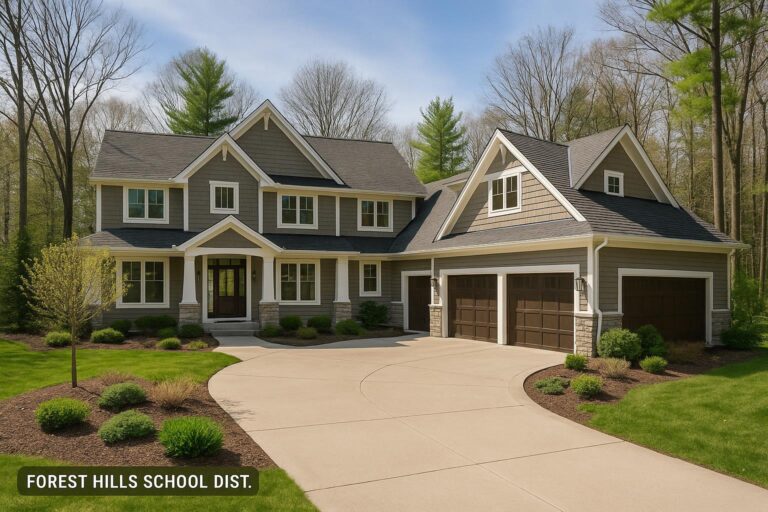
When preparing to sell your home in the Forest Hills School District, understanding how 2023 property tax rates impact your sale is critical. In 2023, the average effective property tax rate for homes in the Forest Hills area (covering Ada and Cascade Townships) ranged from 1.58% to 1.73% of assessed value. For homes priced between $400,000 and $1.5 million, this means annual property taxes typically fall between $6,300 and $25,950. These rates directly influence your buyer pool, net proceeds, and how your home competes against similar properties within Forest Hills. Smart sellers address property tax implications early—both in pricing strategy and buyer negotiations.
Quick Answer
Forest Hills homes sold in 2023 faced property tax rates averaging 1.6% to 1.7% of assessed value, varying slightly by township and school district boundaries. Sellers should factor these rates into listing price and buyer negotiations, as buyers compare tax burdens closely—especially in the $400,000 to $1.5 million range.
1. Understand How Property Tax Rates Affect Buyer Decisions
Buyers in Forest Hills are highly attentive to property taxes because of the significant impact on their monthly payments. In 2023, a $900,000 home with a 1.65% effective tax rate meant annual taxes around $14,850. When comparing homes in Forest Hills Central versus Forest Hills Eastern or Northern attendance zones, buyers often ask about the difference in millage rates and whether the township (Ada or Cascade) affects their long-term costs. Sellers who proactively provide accurate tax figures and recent assessments position their listings more favorably—especially when buyers are weighing similar homes across different Forest Hills neighborhoods.
It’s important to note that Forest Hills School District millages are among the highest in Kent County, due to exceptional school funding and amenities. However, buyers see this as a value proposition when the home is well-priced and the district’s academic reputation is emphasized. Proactively addressing the tax rate and what it delivers (such as top-rated schools and community amenities) helps keep buyers focused on the home’s benefits rather than just the tax bill.
2. Pricing Strategy: Adjust for Township and School District Boundaries
Forest Hills covers both Ada and Cascade Townships, and while both are desirable, their tax rates and special assessments can differ slightly. For example, Cascade Township homes typically carry a millage rate near 41.1 mills, while Ada Township can be marginally higher depending on local assessments and public safety millages. Sellers should confirm the exact millage with their township treasurer or use the Kent County tax estimator (Kent County Property Tax Estimator) to provide buyers with precise figures.
When pricing your home, recognize that a $10,000 difference in annual taxes can shift a buyer’s affordability threshold by $800–$900/month in mortgage payments. In competitive price bands, such as $500,000–$800,000, this can make your home more or less attractive compared to similar properties in neighboring school districts or even within Forest Hills itself. Adjust your list price or offer closing concessions to offset any perceived tax disadvantage—especially if your home is in a higher-millage zone.
3. Prepare for Buyer Questions and Objections
Buyers relocating from outside West Michigan—especially those drawn to Cascade Township for its proximity to major employers—often express surprise at Forest Hills’ property tax rates. They compare these rates to East Grand Rapids or Grand Rapids Township, and may ask for copies of the latest tax bills or clarification on how the millage is calculated. Be prepared to answer these questions confidently and transparently. Provide a recent tax bill, and if your home is newer construction, explain how the assessed value could change after the sale, since Michigan’s Proposal A can uncap taxable value for new owners.
Some buyers may request a tax proration or ask for seller credits at closing if taxes are notably higher than a competing home. In 2023, I saw multiple buyers use tax rate comparisons as leverage in negotiations—particularly for homes near the $1 million mark. Sellers who anticipate this and have documentation ready often maintain more control during negotiations and avoid last-minute deal friction.
4. Decision-Making Framework: The Tax Rate “Rule of Thumb” for Sellers
A practical rule of thumb for Forest Hills sellers is to calculate the property’s annual tax as approximately 1.6%–1.7% of the likely sale price, then use this figure to benchmark against comparable homes on the market. If your tax rate is at the upper end of this range, consider pricing your home slightly more aggressively or offering incentives such as covering a portion of the buyer’s closing costs.
For example, if your $1.2 million home in Ada Township carries an annual tax bill of $20,400 (1.7%), compare that to a similarly priced home in Cascade with a $19,200 bill (1.6%). Even a $100/month difference can sway buyers, especially those moving from out of state. Use this framework to guide pricing discussions, anticipate buyer pushback, and position your home competitively within the Forest Hills School District marketplace.
Real Seller Case Study
In 2023, I represented a seller in Cascade Township’s Beard Farms neighborhood with a home listed at $1.1 million. The property attracted multiple offers from relocation buyers seeking Forest Hills Central High School attendance. The annual property tax was $18,200 (about 1.65% of value). One out-of-state buyer was initially concerned about the tax rate, but after we supplied detailed breakdowns and highlighted the district’s reputation and community amenities, they shifted focus to the home’s value and location. The final sale closed at 98% of list price with no seller concessions—demonstrating how transparency and context around taxes can help preserve your bottom line.
Forest Hills Market Insight
From my experience listing homes throughout the Forest Hills School District, buyers consistently prioritize attendance zones—Forest Hills Central remains the top draw for families, while Forest Hills Northern attracts buyers who want larger lots near Ada Village. Homes with wooded settings in Cascade Township tend to command premium prices, especially among relocation buyers from outside Michigan who value privacy and newer construction. In these scenarios, a slightly higher tax rate is rarely a dealbreaker if the home’s features and location align with buyer expectations.
Frequently Asked Questions About Selling in Forest Hills School District
-
How do Forest Hills property tax rates compare to nearby districts?
Forest Hills rates are slightly higher than some neighboring districts due to school millages, but many buyers see this as justified by the schools’ academic performance. -
Will my taxable value uncap when I sell my home?
Yes, under Michigan law (Proposal A), the taxable value resets to the sale price for new owners, which can increase their future tax bill. -
Can I appeal my property tax assessment before selling?
Yes, but appeals must be filed in March with the local Board of Review. Consult your township assessor for specifics. -
Do buyers ever walk away because of property taxes?
While rare, some buyers have walked away from deals in the $1M+ range due to tax concerns, but most are satisfied if the home and schools meet their needs.
Related Forest Hills Seller Resources
- Maximize Your Listing: Forest Hills Peak Buyer Timing Guide
- How to Choose the Right Renovation Projects Before Selling
- How Pre-Listing Repairs Raise Your East Grand Rapids Home Value
About the Author
Jason Pohlonski
is a Michigan licensed real estate salesperson specializing in strategic home sales in East Grand Rapids, Forest Hills, Ada, and surrounding West Michigan communities.
Jason began his real estate career in Chicago in 2004, later expanding his experience in Ann Arbor from 2014 to 2019, and has been serving clients in the Grand Rapids area since 2019.
With over 20 years of combined real estate experience across multiple markets, Jason focuses on pricing strategy, negotiation structure, and helping clients make confident decisions during complex transactions.
Jason is recognized by platforms and industry organizations including Zillow, Grand Rapids Magazine Real Estate All-Stars, and Real Producers for his work serving West Michigan buyers and sellers.
Professional Disclosure
Jason Pohlonski
Michigan Licensed Real Estate Salesperson
License Verification: Verify Michigan License #360538118
Brokerage: Keller Williams Grand Rapids East
📱 Call or text: 616-916-9770
📅 Schedule consultation:
https://calendly.com/pohlonskirealestate/30min
This article reflects real client experiences and market conditions in Forest Hills School District and surrounding communities at the time of publication.
Real estate outcomes can vary depending on market conditions, property characteristics, and buyer demand.