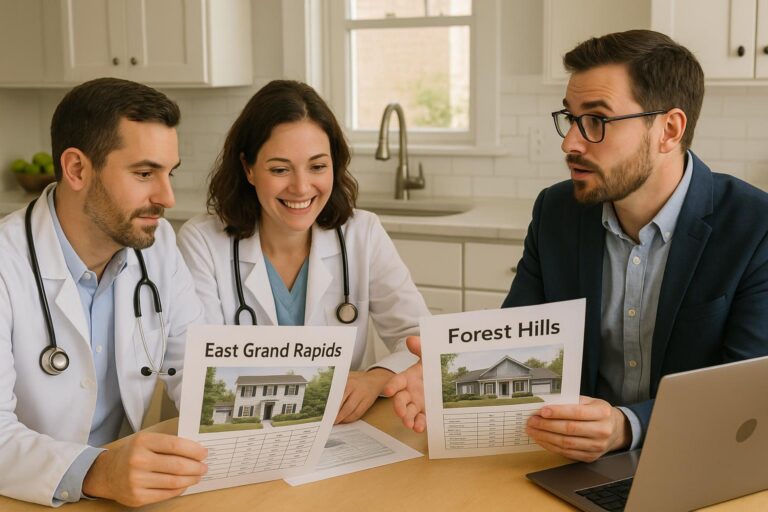
Can Doctors Buy a Home in Grand Rapids With a Physician Loan?
Yes, doctors, residents, fellows, dentists, veterinarians, and some other medical professionals may be able to buy a home in Grand Rapids with a physician loan. The details depend on the lender, the borrower, the loan program, the property, and the timing of the purchase.
The bigger question is not just whether a physician loan exists. It is whether that type of financing fits your timing, your contract, your student loan situation, your cash position, and the kind of home you want to buy in Grand Rapids.
I am not a lender, so this article is not mortgage advice. But from the real estate side, I regularly see why physician buyers ask about these loans: they may be finishing residency, starting a new attending role, relocating to Grand Rapids, staying here after training, or moving up from a condo, rental, or first home.
Real Physician Buyer Situations I See in Grand Rapids
Physician buyers in Grand Rapids are not all in the same situation. Some are relocating for a new role, while others already live here after residency or fellowship and are deciding whether it is time to buy, sell, or move up.
For example, I have worked with medical professionals who first bought a condo or smaller home during training, then later moved into a larger home after starting an attending role. That kind of move is not just about buying more house. It often involves selling the first property, deciding whether to buy or sell first, coordinating loan timing, and choosing a neighborhood that fits a new income, commute, and long-term plan.
I have also helped physician buyers think through tight-schedule searches where the timing of a new role, loan documentation, inspection period, and closing date all had to line up. Those details matter because a strong home choice still has to work with the buyer’s financing, work schedule, and move timeline.
What Is a Physician Loan?
A physician loan, sometimes called a doctor loan or doctor mortgage, is a mortgage program designed for certain medical professionals. Depending on the lender and program, physician loans may offer low or no down payment options and may not require private mortgage insurance. For comparison, the Consumer Financial Protection Bureau explains that PMI is often required on conventional loans when the buyer makes a down payment of less than 20 percent of the purchase price. Source: Consumer Financial Protection Bureau.
Some programs may also look differently at student loan debt, future income, or a signed employment contract. That can matter for physicians who are not yet earning their full attending income but already have a role lined up.
Every program is different. Before you make a buying decision, talk with a qualified mortgage professional who works with physician loan programs and can explain the actual terms, costs, rates, approval requirements, and tradeoffs.
Why Physician Loans Can Matter in Grand Rapids
Grand Rapids has a wide range of housing options, from downtown condos and first homes to East Grand Rapids, Forest Hills, Byron Center, Ada, Cascade, and other nearby communities. For medical professionals, the right choice often depends on commute, call schedule, schools, lifestyle, budget, and how long you expect to stay.
A physician loan may help some buyers enter the market sooner or keep more cash available during a career transition. That can be useful if you are relocating, finishing training, starting a new contract, or trying to buy before your schedule becomes harder to manage.
But the loan is only one part of the decision. You still need to understand the home, the neighborhood, the inspection, the appraisal, the offer terms, the closing timeline, and whether the property fits your next few years.
Can You Buy Before Starting Your New Job?
This is one of the biggest questions physicians ask.
Some physician loan programs may allow buyers to qualify using a signed employment contract or future employment documentation, but the timing and requirements vary by lender. Regions Bank’s physician mortgage overview notes that some physician mortgage programs may allow applicants to qualify using a signed employment contract. Source: Regions Bank.
From the real estate side, the key is making sure your search timeline and financing timeline match. If your lender needs specific documentation before closing, that needs to be understood before you write an offer.
What If You Already Live in Grand Rapids?
Not every physician buyer is relocating.
Many residents, fellows, and medical professionals already live in Grand Rapids. They may have moved here for training, rented for a few years, bought a condo, or purchased a smaller first home. Then the next stage arrives: a permanent role, higher income, a family change, or a decision to stay in West Michigan longer term.
In that situation, the question may not be “Can I move to Grand Rapids?” The better question may be:
- Should I keep renting or buy now?
- Should I sell my condo and move up?
- How much house makes sense with my new income?
- Do I want to be closer to the hospital, closer to schools, or in a quieter area?
- Should I buy before or after my current lease or home sale?
That is where local guidance matters. A physician loan may help with financing, but the real estate decision still needs to fit your life.
Common Physician Buyer Scenarios in Grand Rapids
1. The relocating physician
You are moving to Grand Rapids for a new role and need to compare areas quickly. You may be doing video tours, flying in for a short weekend, or trying to write an offer before your schedule gets tight.
2. The resident or fellow staying in Grand Rapids
You already know the area, but now your income, timeline, and long-term plans are changing. You may be deciding whether to buy your first home or move into something more permanent.
3. The move-up physician buyer
You may own a condo, townhouse, or smaller first home and now want more space, privacy, a different school district, a better commute, or a longer-term property.
4. The physician buyer who also needs to sell
You may need to sell your current home before buying the next one, or you may want to understand whether you can buy first. That requires a careful look at equity, financing, timing, occupancy, and offer strength.
What Should You Ask the Lender?
Before relying on a physician loan, ask the lender direct questions:
- Am I eligible based on my profession and career stage?
- Can I qualify with a signed employment contract?
- How are my student loans counted?
- Is PMI required?
- What down payment options are available?
- What are the interest rate, fees, and closing costs?
- Are there limits based on property type or occupancy?
- How long before my start date can I close?
- What documentation do you need before we write an offer?
These answers can affect which homes you should consider and how your offer should be written.
Because physician loan terms can vary significantly by lender, buyers should compare the interest rate, down payment, PMI treatment, loan limits, closing costs, property restrictions, and eligibility rules before choosing a program. PNC’s physician mortgage overview is another example of how lenders describe these programs and their intended audience. Source: PNC.
What Should You Ask Your Realtor?
The lender handles the financing. Your Realtor should help you understand the real estate side.
Good questions include:
- Which areas make sense for my commute and schedule?
- What homes fit my budget without stretching the monthly payment too far?
- How competitive is the market for the type of home I want?
- What inspection issues are common in the homes I am considering?
- How should we structure an offer if I am using a physician loan?
- What could affect the appraisal?
- How do we handle showings if I am relocating or working long hours?
- Should I buy now, wait, rent longer, or sell first?
Where Do Physician Buyers Look Around Grand Rapids?
There is no single right answer. Some physicians want a short commute to the Medical Mile or downtown Grand Rapids. Others want East Grand Rapids, Forest Hills, Byron Center, Ada, Cascade, or another community that better fits schools, space, privacy, or long-term plans.
The right area depends on your work location, call schedule, budget, home style, tolerance for maintenance, and whether you are thinking about a short-term stay or a longer-term home.
Jason’s Take
A physician loan can be a useful tool, but it should not be the only reason you buy a home.
The better approach is to start with your real life: where you will work, how long you expect to stay, what your schedule will look like, how much maintenance you want, and whether this is a first purchase, a move-up purchase, or part of a larger relocation.
Once that is clear, the financing conversation becomes much easier. The loan should support the decision, not drive the entire decision.
Related Grand Rapids Real Estate Resources
If you are still comparing areas or trying to decide what type of move makes sense, these local resources may help:
- Grand Rapids Physician Real Estate Help
- East Grand Rapids real estate resources
- Forest Hills real estate resources
- Grand Rapids area weekly market reports
- Questions Grand Rapids Buyers Ask
Thinking About Buying in Grand Rapids With a Physician Loan?
If you are a doctor, resident, fellow, dentist, veterinarian, or medical professional thinking about buying in Grand Rapids, I can help you think through the real estate side of the process.
That may include local area guidance, commute questions, physician loan timing, virtual showings, offer terms, inspections, appraisals, and whether buying now actually makes sense for your situation.
Start here: Grand Rapids Physician Real Estate Help.
You can also schedule a 30-minute call or text Jason at 616-916-9770.
Helpful External Resources
For additional background on physician mortgage programs, review lender and mortgage resources such as PNC’s physician mortgage overview and Regions Bank’s guide to physician mortgage loans. Program details vary, so always confirm your options with a qualified mortgage professional.
About the Author
Jason Pohlonski is a Michigan licensed real estate salesperson with Keller Williams Grand Rapids East. He helps buyers and sellers throughout Grand Rapids, East Grand Rapids, Forest Hills, Ada, Byron Center, Jenison, Cascade, and surrounding West Michigan communities.
Jason began his real estate career in Chicago in 2004, later expanding his experience in Ann Arbor from 2014 to 2019, and has been serving clients in the Grand Rapids area since 2019.
With over 20 years of combined real estate experience across multiple markets, Jason focuses on helping clients make clear real estate decisions involving pricing, offer terms, inspections, appraisals, relocation timing, and buy-sell planning.
Jason has worked with physician and medical professional buyers in different stages of the process, including relocation buyers, residents and fellows staying in Grand Rapids after training, move-up buyers purchasing after a new attending role, and clients selling a condo or first home before buying the next property.
Industry Recognition
Jason is recognized by platforms and industry organizations including Zillow, Grand Rapids Magazine Real Estate All-Stars, and Real Producers for his work serving West Michigan buyers and sellers.
Jason also supports One More Moment, a nonprofit that grants wishes to late-stage cancer patients, by donating $100 for every successful closing.
Professional Disclosure
Jason Pohlonski
Michigan Licensed Real Estate Salesperson
License Verification: Verify Michigan License #6501386166
Brokerage: Keller Williams Grand Rapids East
Brokerage Office: 1555 Arboretum Dr. SE, Grand Rapids, MI 49546
📱 Call or text: 616-916-9770
📅 Schedule consultation:
https://calendly.com/pohlonskirealestate/30min
📧 Email: jpohlonski@kw.com
This article reflects real client experiences and market conditions in Grand Rapids and surrounding communities at the time of publication. Real estate outcomes can vary depending on market conditions, property characteristics, buyer demand, financing terms, inspection results, appraisal results, and lender requirements.
This article is for general informational purposes only and is not mortgage, legal, tax, or financial advice. Jason Pohlonski is not a lender. Physician loan programs, eligibility, interest rates, down payment options, loan limits, PMI requirements, and mortgage qualification standards vary by lender and borrower. Buyers should speak directly with a qualified mortgage professional before making financing decisions.