How to Decide Between Neighborhoods in Grand Rapids
When buyers ask how to choose between different neighborhoods in Grand Rapids, the key is to line up your lifestyle needs, budget, and future plans with what each area actually offers. In practice, this means focusing on school districts, commute times, neighborhood feel, and resale potential—then narrowing it down with a real look at how homes in those areas match your price range. The best strategy is to get clear about your non-negotiables first, then tour several neighborhoods with your agent to see how each one stacks up in real life.
Quick Answer
To choose between neighborhoods in Grand Rapids, start by ranking your priorities: school quality, commute, amenities, home style, and budget. Research school districts, drive potential commutes at real times, and walk around neighborhoods at different hours to get a feel for daily life.
Once you’ve narrowed your list, review recent sales in your price range and talk with your agent about current competition and resale trends in each area. If you want help weighing your options, I’m always happy to walk through neighborhoods with you and talk through the trade-offs.
Compare School Districts and Education Options
For many Grand Rapids buyers, school district boundaries have a major impact on neighborhood decisions—even for those without kids. Highly rated districts like Forest Hills, East Grand Rapids, and Rockford tend to drive up both demand and price. Homes in these districts often see more multiple-offer situations, and buyers are typically willing to stretch budgets or waive minor inspection items to secure a property.
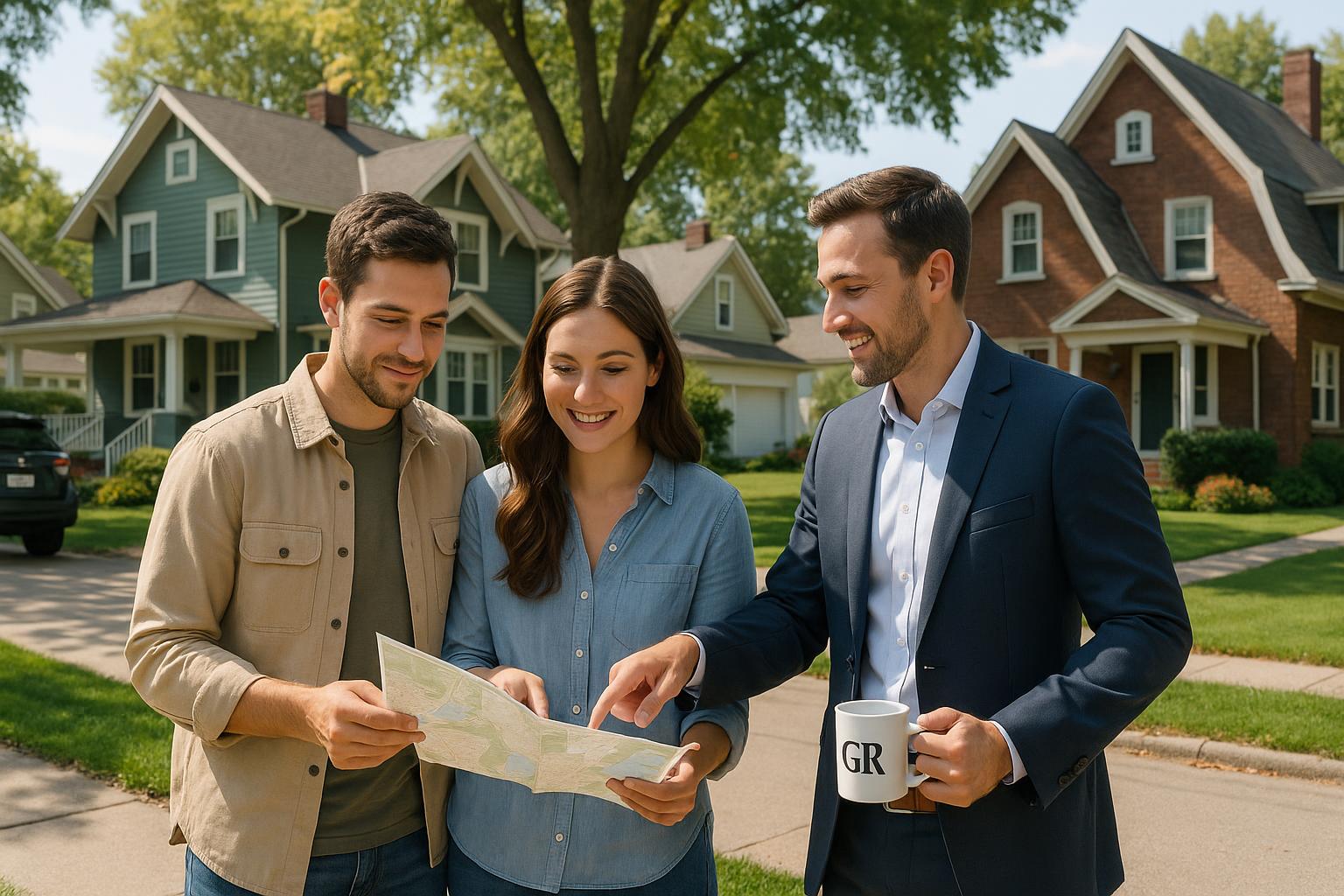
Jason’s take: “If you’re targeting Forest Hills or East Grand Rapids schools, expect to compete with buyers who are laser-focused on district lines. I’ve seen families choose a smaller home just to be in the district they want.” For public school data, check resources like GreatSchools or the district’s own site for boundary maps and performance scores. Touring neighborhoods at school drop-off or pick-up hours can give you a sense of the community vibe and traffic flow, too.
Factor in Commute and Transportation
Grand Rapids is known for its manageable size, but commute times can still vary dramatically depending on where you work and how you travel. If you work downtown but want more space or a quieter feel, areas like Ada or Cascade might work—just be sure to test the drive during rush hour. On the other hand, if walkability and quick access to shops or restaurants matter most, neighborhoods like Eastown, Heritage Hill, or Alger Heights offer short commutes and plenty of local flavor.
Jason’s take: “I always encourage buyers to drive their actual commute from each neighborhood at the time they’d leave for work. It’s the only way to avoid surprises after moving in.” Don’t overlook access to main highways or bus routes if you rely on public transportation; the Rapid bus system covers much of the city, but coverage thins out in the suburbs.
Neighborhood Vibe, Amenities, and Community Fit
The personality of each Grand Rapids neighborhood can feel totally different, even if they’re only a few miles apart. Some buyers want tree-lined streets and historic homes—think Heritage Hill or Ottawa Hills—while others prefer newer construction and larger lots, like you’ll find in Byron Center or Kentwood. Spend time walking or driving through your top neighborhoods at different times of day and week to get a sense of noise, traffic, and neighbor interactions.
Here’s a simple rule of thumb: if you don’t find yourself excited to grab coffee, walk the dog, or run errands in a neighborhood, it might not be the right fit. Local parks, playgrounds, restaurants, and even grocery stores can make a big difference in daily life. Look for places where you see yourself spending time outside of your home, not just inside it.
Price Range, Market Trends, and Resale Potential
Even if you love a neighborhood, it has to fit your budget—and your future plans. Grand Rapids market data shows that median sale prices and appreciation rates can differ by tens of thousands of dollars between areas. For example, according to the Greater Regional Alliance of REALTORS®, East Grand Rapids and Forest Hills regularly see higher median prices and faster sales than the city core or some southern suburbs. This affects both your purchase options now and your resale flexibility later.
Jason’s take: “In neighborhoods with higher demand, I’ve seen buyers win with strong appraisal gap coverage or shorter inspection windows. But in less competitive areas, you might have more room to negotiate price or repairs.” Talk with your agent about recent sale prices, days on market, and how quickly homes in each area appreciate. This helps set realistic expectations for both the buying process and future resale.
Real Buyer Case Study
Recently, I worked with a relocation buyer moving to Grand Rapids for a job at Spectrum Health. Their price range was $350,000–$400,000, and they wanted a family-friendly vibe with walkable amenities. We started with East Grand Rapids, but quickly saw that homes in their range were either too small or needed major updates. After touring Alger Heights and Ottawa Hills, we found a recently updated home in Alger Heights. There were two other offers, but my clients were able to win by including a flexible closing date and a modest appraisal gap. They loved the neighborhood’s community feel, quick downtown access, and nearby parks—and appreciated that the area had strong resale trends without the extreme competition of East Grand Rapids.
Grand Rapids Buyer Market Insight
Right now, I’m seeing first-time buyers compete most fiercely in the $250,000–$350,000 range, especially in move-in ready homes within top school districts. In these areas, multiple offers and appraisal gaps are almost the norm. In contrast, neighborhoods just outside those district lines, or with slightly longer commutes, tend to have less competition and more negotiation room on both price and inspections. School districts continue to be a major driver of buyer demand and price premiums in Grand Rapids.
Frequently Asked Questions About Buying in Grand Rapids
- How do I know if a Grand Rapids neighborhood is safe?
Check local crime maps, talk to neighbors, and visit at different times of day. Your agent can also share recent neighborhood trends and resources. - What if I want walkability and a yard?
Look at Eastown, Alger Heights, or certain pockets of Heritage Hill for historic homes with yards and walkable access to local businesses. - Are property taxes similar across neighborhoods?
Property taxes can vary by city and township. East Grand Rapids and some suburbs have higher millage rates, so verify tax estimates with your agent. - Can I switch school districts after buying?
School district boundaries are set by your home’s location. Some districts offer Schools of Choice, but acceptance isn’t guaranteed—plan accordingly.
Related Grand Rapids Buyer Resources
- How to Pick the Right Grand Rapids Neighborhood to Buy a Home
- Should Grand Rapids Buyers Worry About Basement Moisture?
- When Should I List My Grand Rapids Home?
About the Author
Jason Pohlonski
is a Michigan licensed real estate salesperson specializing in strategic home sales in East Grand Rapids, Forest Hills, Ada, and surrounding West Michigan communities.
Jason began his real estate career in Chicago in 2004, later expanding his experience in Ann Arbor from 2014 to 2019, and has been serving clients in the Grand Rapids area since 2019.
With over 20 years of combined real estate experience across multiple markets, Jason focuses on pricing strategy, negotiation structure, and helping clients make confident decisions during complex transactions.
Jason is recognized by platforms and industry organizations including Zillow, Grand Rapids Magazine Real Estate All-Stars, and Real Producers for his work serving West Michigan buyers and sellers.
Professional Disclosure
Jason Pohlonski
Michigan Licensed Real Estate Salesperson
License Verification: Verify Michigan License #360538118
Brokerage: Keller Williams Grand Rapids East
📱 Call or text: 616-916-9770
📅 Want a quick second opinion before you make a move?
Schedule a quick 30-minute call
This article reflects real client experiences and market conditions in Grand Rapids and surrounding communities at the time of publication.
Real estate outcomes can vary depending on market conditions, property characteristics, and buyer demand.